
Comparison and decision guides
Aluminum vs Steel vs Copper Gutters
By the V&V Seamless Gutters crew · Published and updated November 1, 2026
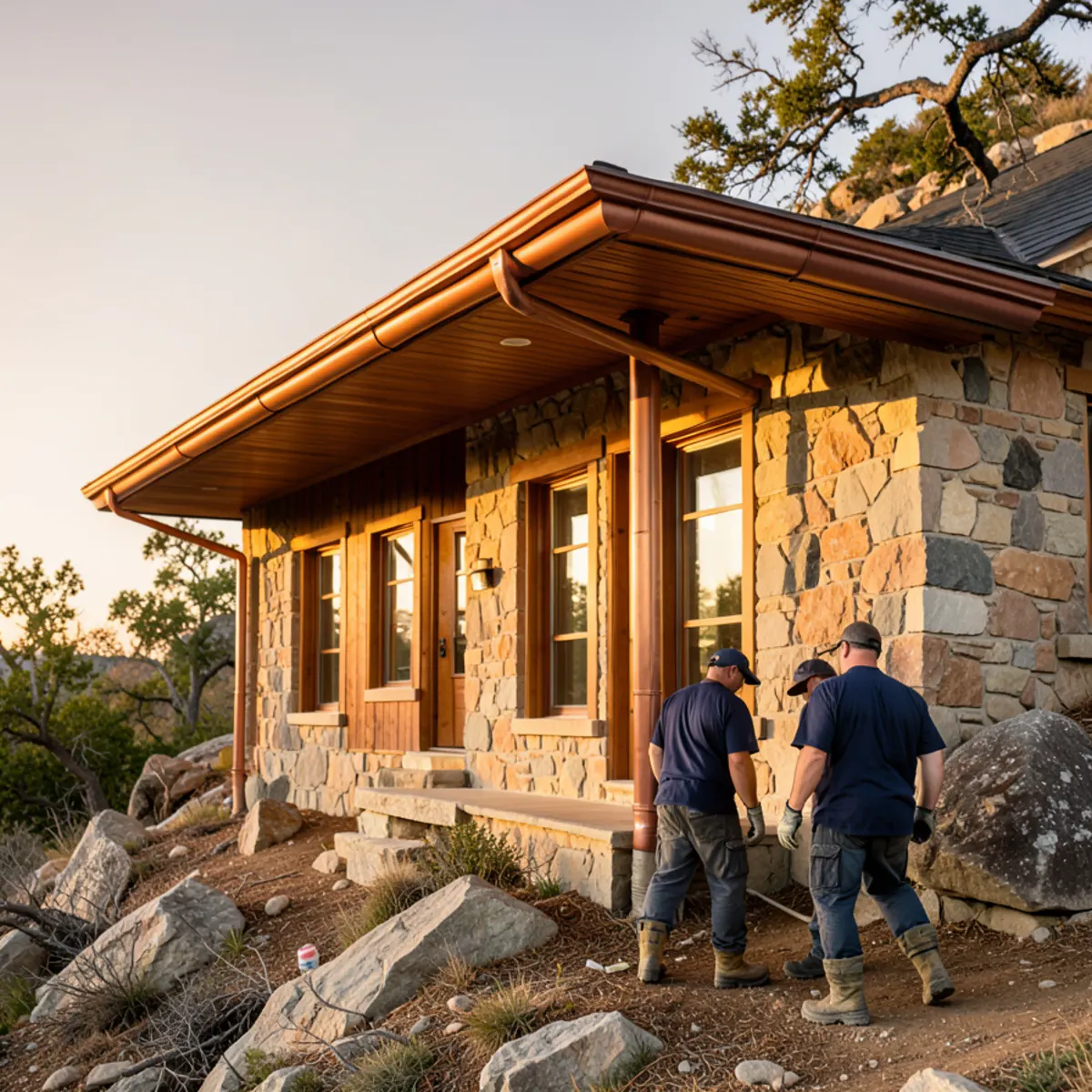
For most Central Texas homes, aluminum is the right call among aluminum vs steel vs copper gutters. It does not rust, it is light on the fascia, and it costs the least. Steel makes sense when dent resistance matters most. Copper is an appearance and longevity choice at a much higher price. Ask about steel and copper when you call.
Aluminum vs steel vs copper gutters at a glance
Figures below come from the sources named, not from us. They use national or Austin data, and every source measures a slightly different job, so read them as ranges rather than quotes.
| Aluminum | Galvanized steel | Copper | |
|---|---|---|---|
| Installed cost per linear foot | $4 to $10 (Angi, Austin local installers, 2026) | $8 to $13 (Angi, 2026) | $18 to $40 (Angi, 2026) |
| Listed lifespan | 20 to 30 years (national tables) | About 30 years (This Old House) | 50 years or more (This Old House) |
| Dent resistance | Lowest, improves with gauge | Highest of the three | Moderate, soft metal |
| Main weakness | Dents | Rust once the coating fails | Price, and contact with other metals |
| Weight on fascia | Light | Heavy | Heavy |
| Appearance | Many painted colors | Plain or painted | Bright, then brown, then green |
| Seam method | Roll-formed, sealed corners | Varies | Often soldered joints |
Weighing up materials? Call us, ask what is available, and get a written quote for the options that fit.
- 4.5★ from 36 Google reviews
- Free estimates
- Run by owner Victor and his son Omar
Why does aluminum win most of the time here?
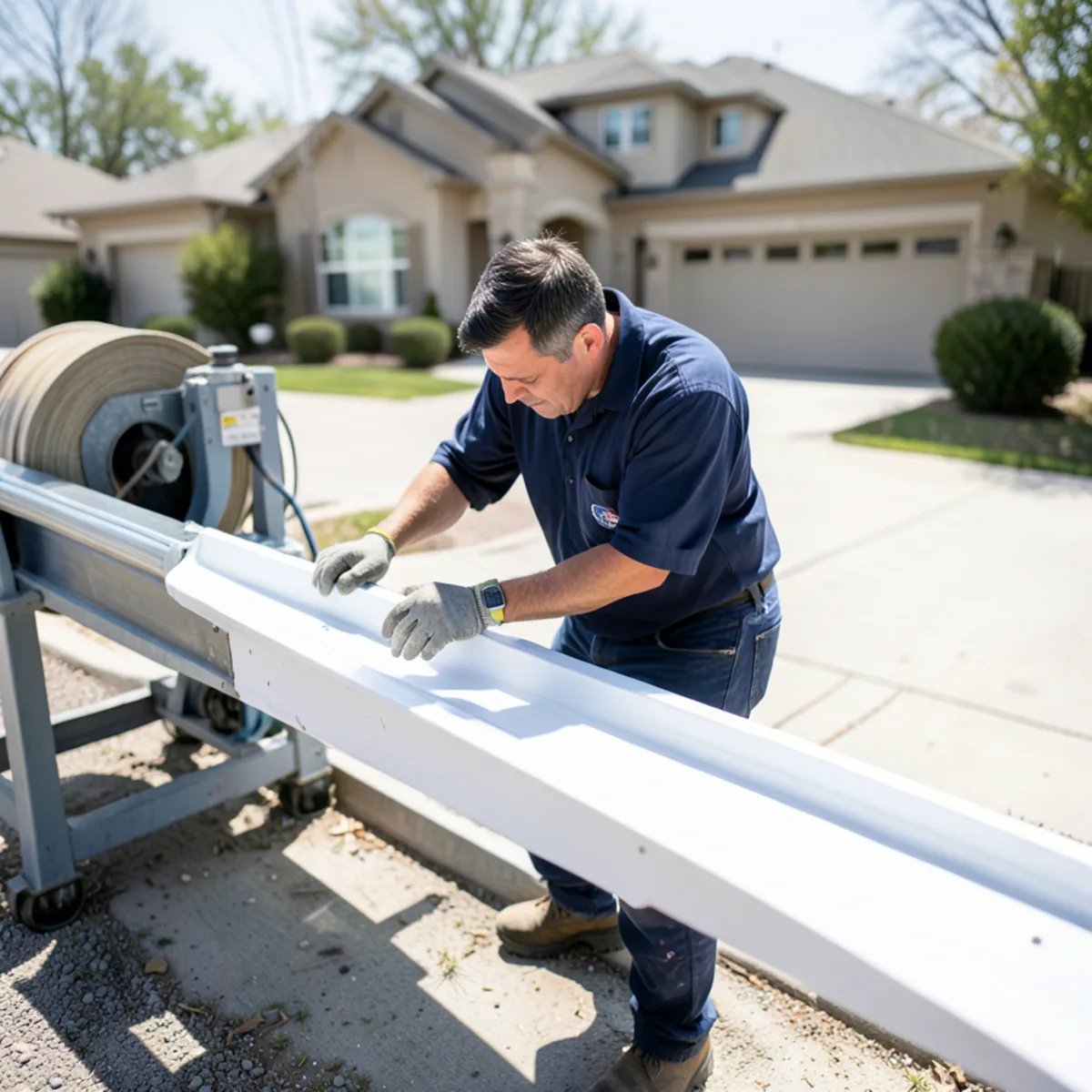
Three reasons: it is cheap to install, it will not rust, and it forms easily. A portable roll-forming machine feeds flat aluminum coil, shapes the K-style profile, and cuts the length at the house, so the only seams sit at corners and end caps. It also takes a painted finish, so you can match trim.
Gauge is what separates good aluminum from bad. Gauge means thickness, and for aluminum a bigger decimal means thicker metal. We hang .027 aluminum as a minimum, the common professional standard, with .032 as the heavier option. Big-box stock is often .025 or .019. This Old House notes aluminum is prone to dents, and large dents can cause clogs and cracks, so thin aluminum is where the material earns its bad reputation.
For most homes, gutter installation in .027 or .032 aluminum is the practical choice. It handles a hail-prone climate better than thin stock, even if it will never match steel on dents.
When does steel make sense?
Steel is stronger. This Old House calls it stronger and more resistant to denting than aluminum, and it puts steel at about 30 years and $7 to $12 per linear foot. Angi lists installed galvanized steel at $8 to $13, and stainless at $16 to $20. Those are not the same job, so do not average them.
The trade-off is corrosion. Galvanized steel relies on a zinc coating. Once that coating wears or gets scratched, rust starts, usually at seams, cuts and spots where debris stays wet. Keep steel clean. It is also heavier, which means a sound fascia and solid hardware matter more.
Steel fits houses under big limbs, sites where ladders and impacts are frequent, and owners who put dent resistance first. For availability, ask us when you call. The page on steel gutters describes what to weigh.
Is copper worth it?
Only if you want the look and plan to keep the house. This Old House says copper can last 50 years or more, with some gutter companies estimating 80 to 100, and it puts installed cost at $20 to $40 per linear foot. Angi's 2026 range is $18 to $40. At those prices, copper can cost several times what aluminum does, so it rarely pays back on function alone.
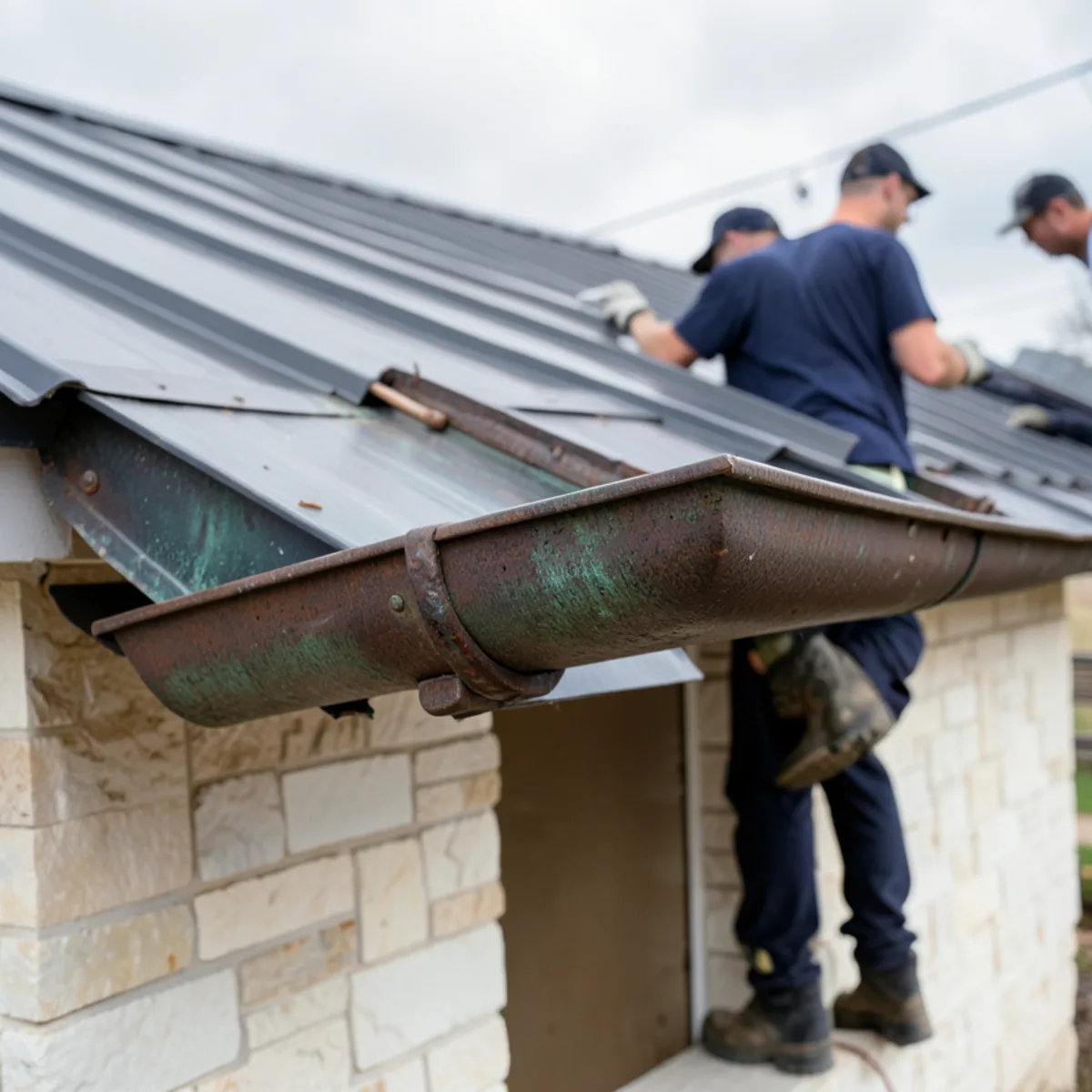
Copper changes color over time, going from bright to brown and then to green. This Old House says that patina takes longer to form in dry locations, so expect a slow change here. Clear coatings can slow it down if you want the shine.
Mixing metals is the main trap. Fasteners should be copper or stainless, because aluminum in contact with copper in wet conditions leads to galvanic corrosion, which is one metal eating away the other. An AMPP Materials Performance article also describes aluminum corroding from runoff off copper roofs, flashing and gutters. Do not put aluminum downspouts below a copper gutter, or aluminum gutters under copper flashing, without asking about it first.
Availability is the other question, so ask us when you call. Read more at copper gutters.
What about Austin's wildfire rules and hillside lots?
If you are inside Austin's jurisdiction, the city's guide to its Wildland-Urban Interface code, the rules for homes near wild land, lists noncombustible gutters and downspouts with leaf guards in Zones A, B and C. All three metals here are noncombustible. The guard is where the choice matters, since vinyl guards typically do not qualify and metal mesh does. Check the Interactive WUI Code Map for your address.
That rule applies only in Austin. Homes in Lakeway and other cities need to check local rules. On hillside lots with cedar and oak debris, the choice is more about access and cleaning than metal, so factor in how often someone will be on a ladder.
Why thin aluminum starts most of these conversations
As a general pattern, most homeowners who come asking about steel or copper are reacting to a bad experience with thin aluminum. Heavier aluminum usually solves that complaint. The owners who really want copper know it, and they are choosing it for the look. Many homes need more downspouts and better discharge much more than they need a different metal.
What each metal asks of you after it goes up
- Aluminum. Keep corners sealed and hangers tight, and expect marks after a big hailstorm. Our hail season guide sorts dents worth fixing from dents worth ignoring. A damaged run is simple to form again, though new paint may not match a faded side.
- Galvanized steel. Clear wet debris, and touch up scratches and cut edges before rust gets a start. A steel gutter left full of leaves gives up its main advantage.
- Copper. Accept the color change and keep other metals away from it. Soldered joints need someone who solders, so ask who would handle a repair before you buy.
Ask how the run will be made as well. We roll-form aluminum at the house, so the only seams are at corners and end caps. Other metals may arrive in sections with more joints, and joint count can matter more over the years than the metal itself. Have the quote say which method applies, so a higher price per foot does not come with more places to leak.
How do you decide?
- Start with aluminum at .027 or .032. Change only if you have a clear reason.
- Rule out steel if the house is under constant wet debris and you will not keep it clean.
- Consider copper for the look, and only with a plan for fasteners and adjoining metals.
- Check your fascia. Heavier gutters need sound wood.
- Get every option on a written quote with gauge, size, color and downspout count.
The short version
Aluminum suits most homes. Steel trades rust risk for strength. Copper trades money for looks and longevity. Pick the one that matches your house, then spend your attention on gauge, slope and where the water lands. Torn between two metals? Call us, ask what is available for your house, and we will put the options that fit on one written quote.
Sources
- Angi, gutter installation cost in Austin, TX
- Angi, what are the different types of gutters (2026)
- Angi, cost to install copper gutters (2026)
- This Old House, aluminum gutters guide
- This Old House, copper gutters guide
- AMPP Materials Performance, examining galvanic and deposition corrosion
- City of Austin, Wildland-Urban Interface Code
Common questions
Which gutter material lasts the longest?
Copper, on the published figures. This Old House says copper can last 50 years or more, with steel at about 30 and aluminum commonly listed at 20 to 30 in national contractor tables. None of those are Austin data, and all depend on maintenance. Gutters that stay clean, sloped and well fastened tend to last longer in any metal.
Do aluminum gutters rust?
No. Aluminum does not rust the way steel does, which is a large part of its appeal. It can corrode where it touches copper in wet conditions, so watch for copper flashing and fasteners. Its more common failure in Central Texas is physical: dents, sealant wear at corners, and hardware that loosens.
Can I get a copper look without paying for copper?
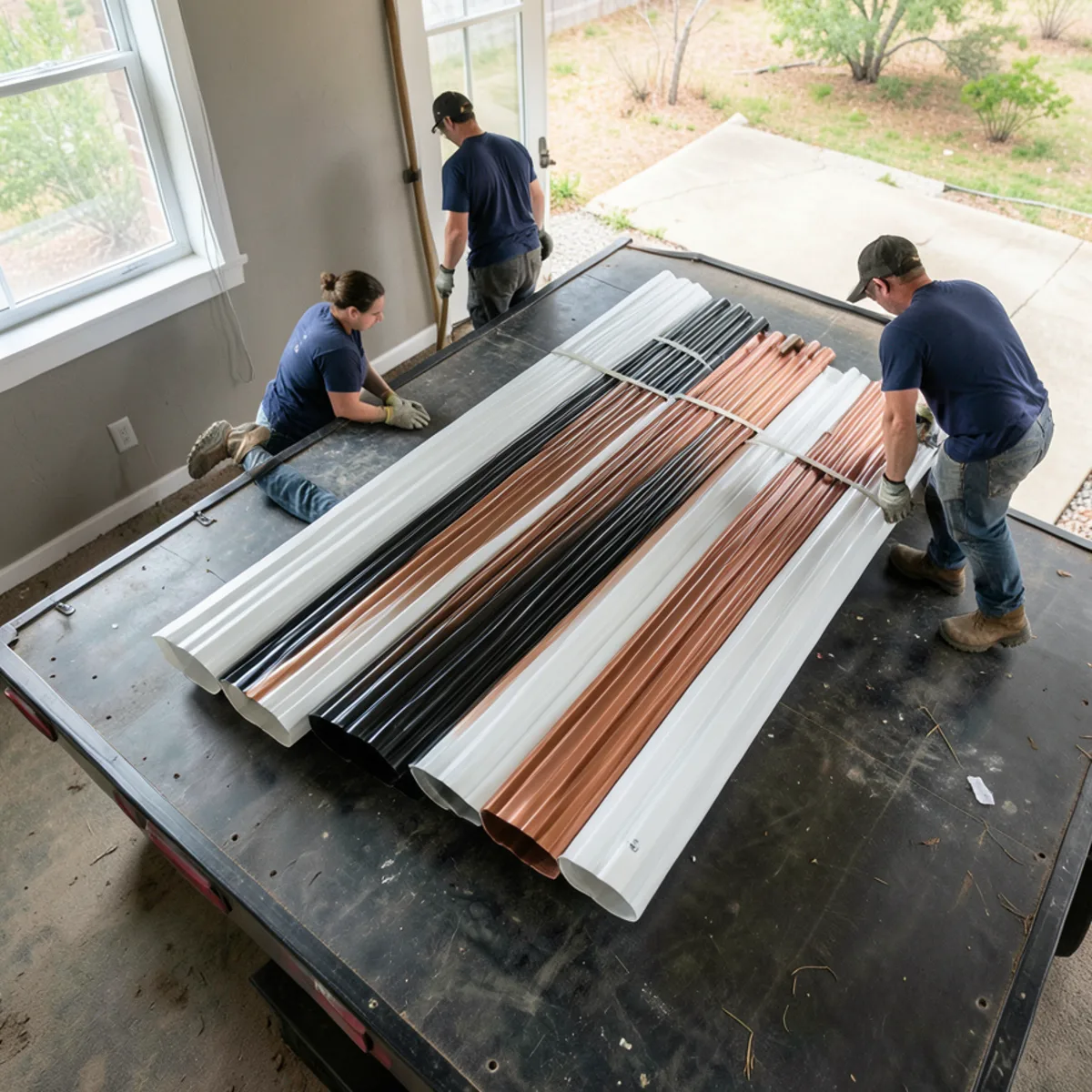
Yes, with a copper-color painted finish, which at least one customer has picked from the color choices. It has the warm tone of copper at a painted-gutter price. It will not age to brown and green, and it is not copper metal. Ask to see a sample against your brick or trim.
Is .032 aluminum worth paying for over .027?
Yes, where dents or flex are the worry, such as long runs, exposed hail sides or spots where ladders land. Both are formed on site the same way, so the seams do not change. On a sheltered single-story wall, .027 usually does the job. Ask for both as line items on one written quote and compare the difference.
About the author
Written by the crew at V&V Seamless Gutters, the Austin gutter company run by owner Victor and his son Omar. Read more about us or see what customers say.
Related service: gutter installation in Austin. We also work in Lakeway.
Have a gutter question this article did not answer?
- 4.5★ from 36 Google reviews
- Free estimates
- Run by owner Victor and his son Omar