
Problem solving
Signs Your Fascia Has Water Damage From Bad Gutters
By the V&V Seamless Gutters crew · Published and updated November 1, 2026

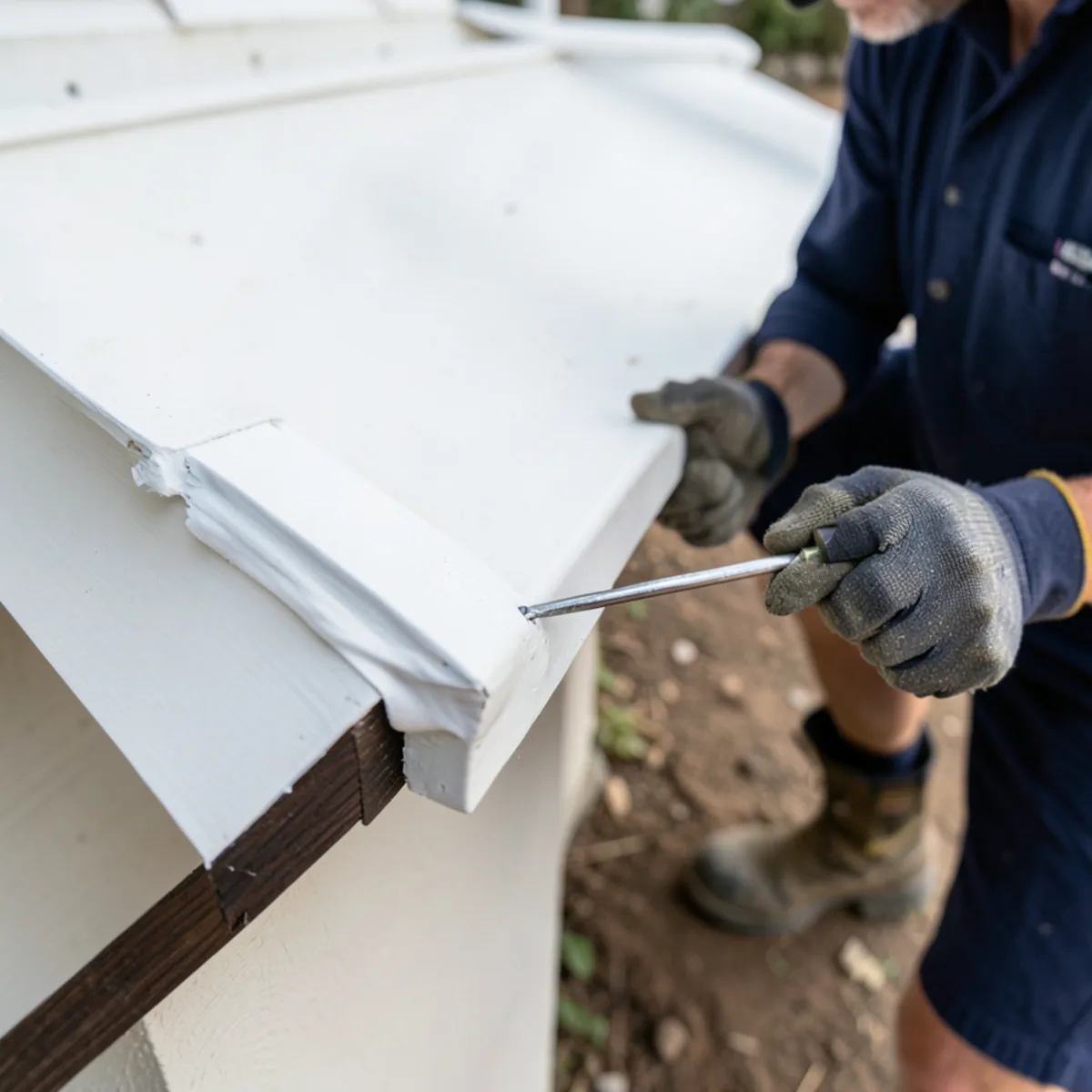
Fascia damage from gutters announces itself in a handful of ways: paint peeling behind the gutter, dark streaks, soft wood, hangers that will not hold, and a gutter line that has started to wander. If a screwdriver sinks into the board, the wood is decaying. Stop the water first, then repair the board, then rehang the gutter.
What is fascia, and why do gutters hurt it?
Fascia is the long trim board along the roof edge. It closes off the rafter ends, and it is what your gutter hangs on. That makes it the first wood water reaches when a gutter fails. Overflow runs down the face. A gap at the roof edge lets water slip behind the gutter and sit against the board. Leaking corners drip on the same spots through every storm.
Wood decays when it stays wet. USDA Forest Products Laboratory research treats about 20 percent moisture as the traditional safe line for wood, with serious decay taking hold around the fiber saturation point, about 30 percent. Dry-out time matters as well. A board that gets wet and dries in the Texas sun is in far better shape than one kept damp behind a clogged gutter.
Peeling paint or soft spots along the roof edge? Call for a free estimate and we will check the board with you.
- 4.5★ from 36 Google reviews
- Free estimates
- Run by owner Victor and his son Omar
Signs of fascia damage from gutters
Check these from the ground first, then from a ladder if you can do that safely. The list runs roughly from early warning to advanced.
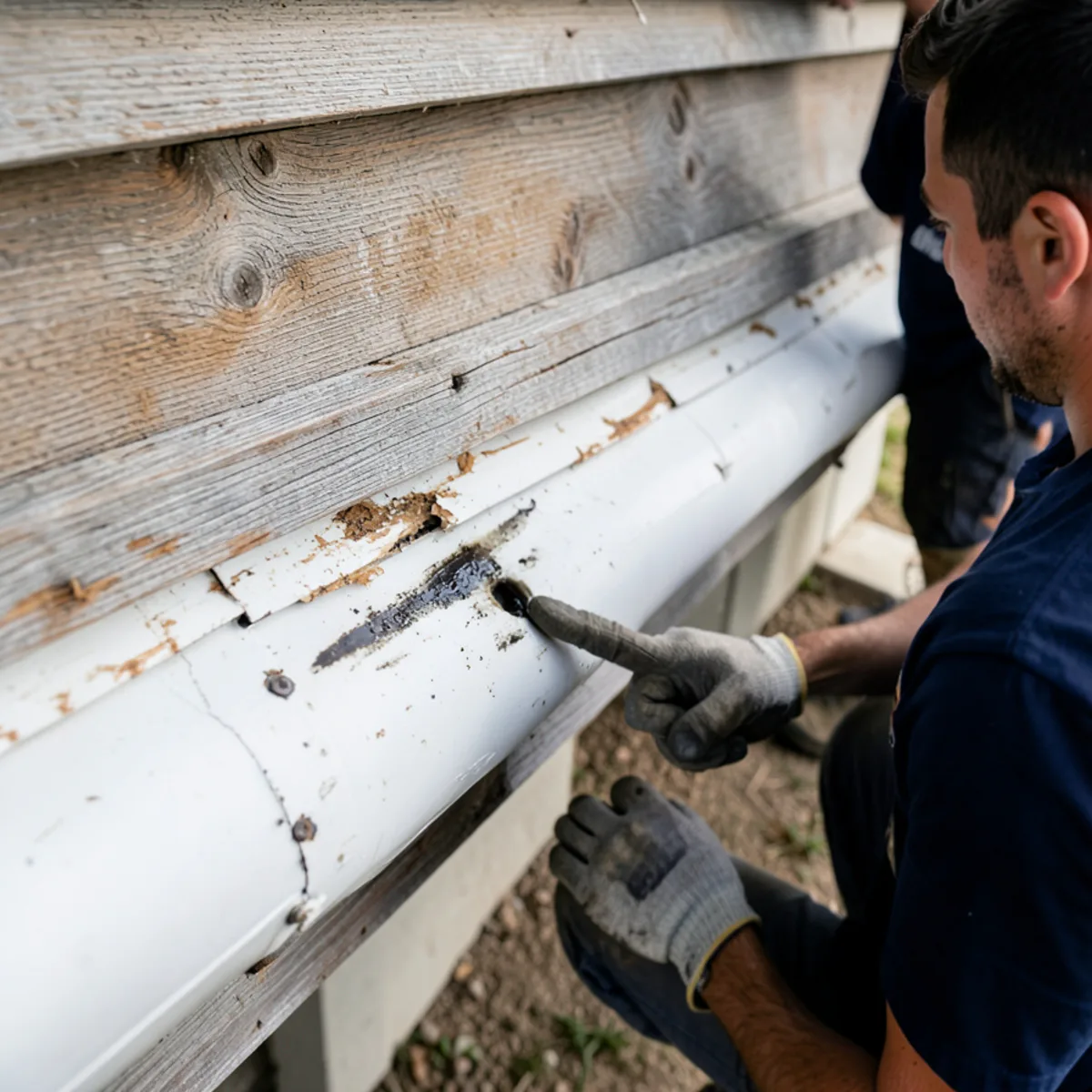
- Paint peeling or bubbling on the board, especially at corners and behind the gutter.
- Dark streaks or staining on the face of the board, often below a joint.
- Tiger stripes on the gutter face. Dirty streaks show water has been spilling over the front lip.
- Water running down the wall behind the gutter during rain.
- Stains or sagging on the soffit, the flat underside of the eave.
- Soft wood. Press a screwdriver in. Sound wood resists, and decayed wood gives.
- Hangers that spin or pull out. The wood can no longer grip a fastener.
- A wavy gutter line. The board is moving, or the hardware has lost its hold.
- Mud tubes, frass or tunnels. That may be insects, not just rot.
What usually causes it?
Find the source or the new board will go the same way. These are the usual suspects, and most houses with fascia damage have more than one.
| Source | Where the damage shows | What stops it |
|---|---|---|
| Clogged gutter or downspout | Long stretches of face, near outlets | Clean it and clear the downspout |
| Leaking corner or end cap | Short local patches | Reseal, or rebuild the corner |
| Gap behind the gutter | Top edge and back of the board | Add or correct drip edge or gutter apron |
| Sagging run, lost slope | Low point of the run | Rehang with correct slope |
| Bare wood at cuts or joints | Board ends, miters | Prime and paint all faces |
The gap behind the gutter is the one people miss. Water follows the underside of shingles and can wrap back toward the wood. A metal drip edge or gutter apron carries it into the trough. Without that, the gutter can look fine from the yard while the board behind it stays wet.
Is it rot or termites?
Sometimes both, so check. Texas A&M AgriLife Extension lists poorly maintained gutters among the moisture sources subterranean termites can use, and says moisture may cause wood decay and encourage infestation. It also warns that fungal decay can be confused with termite damage.
So if you find tunnels, mud tubes or droppings, stop and call a licensed pest professional before anyone covers the area up. AgriLife's inspection advice is also worth borrowing here: check roof eaves and gutters for defects that might cause leakage and eventual wood rot.
Why fascia fails first at corners on tract homes
As a general pattern, damage clusters where water stays longest: inside corners, the ends of runs, and the wall right next to a downspout outlet that backs up. Corners are bad because end grain drinks up water. On tract homes, the original builder-grade gutter is often hung on fascia that had thin paint to start with, and any cut end that was left unpainted starts decaying early.
A long straight roofline with few downspouts is a common subdivision layout, including around Pflugerville, and there a single clog can send a lot of water over one stretch. We also find repaint jobs that hid the problem. Fresh paint over soft wood looks fine for a season or two, then bubbles again in the same spots.
How far has it gone? Reading the board
- Paint failed, wood firm. Fix the water source, then scrape, prime and repaint. This is the stage to catch it.
- Soft in one short patch. Cut that section back to sound wood and fit a new piece, primed on every face.
- Soft in several spots along a run. A full new board is usually cleaner than three splices.
- Soft rafter ends behind the board. That is framing work, so bring in a carpenter before anything is rehung.
Splice, full board or metal wrap?
A splice saves material and keeps the sound board in place, but it adds a joint that has to stay sealed, and the line can show through paint in low sun. A full board costs more and means the whole gutter run comes down, which also gives you the chance to reset slope and hardware. Metal wrap looks tidy and needs no repainting, though wrapping soft wood hides rot the same way paint does. Whatever goes on the face, ask to see the wood underneath first.
How does the repair go?
Order matters. Doing the gutter before the wood wastes the gutter work.
- Take down the affected gutter section, and note where water got in.
- Probe the board and the rafter ends behind it to find where sound wood starts.
- Cut out damaged wood back to solid material.
- Fit new fascia, and prime and paint all sides, including cut ends.
- Add or correct drip edge or gutter apron where needed.
- Rehang the gutter with hardware in sound wood, about 1/4 to 1/2 inch of fall per 10 feet.
- Test with water, then watch the first real rain.
Fascia carpentry varies from house to house, so we confirm that scope on the estimate. Read more on fascia and soffit repair, or on leaking gutter repair if the wood looks fine and you have caught the leak in time.
On permits: the City of Austin lists repairing or replacing exterior trim such as wood fascia and soffits as exempt from a building permit, though the work must still meet code. Confirm with Development Services. Outside Austin, including Pflugerville, check your own city and any HOA.
How do you keep it from coming back?
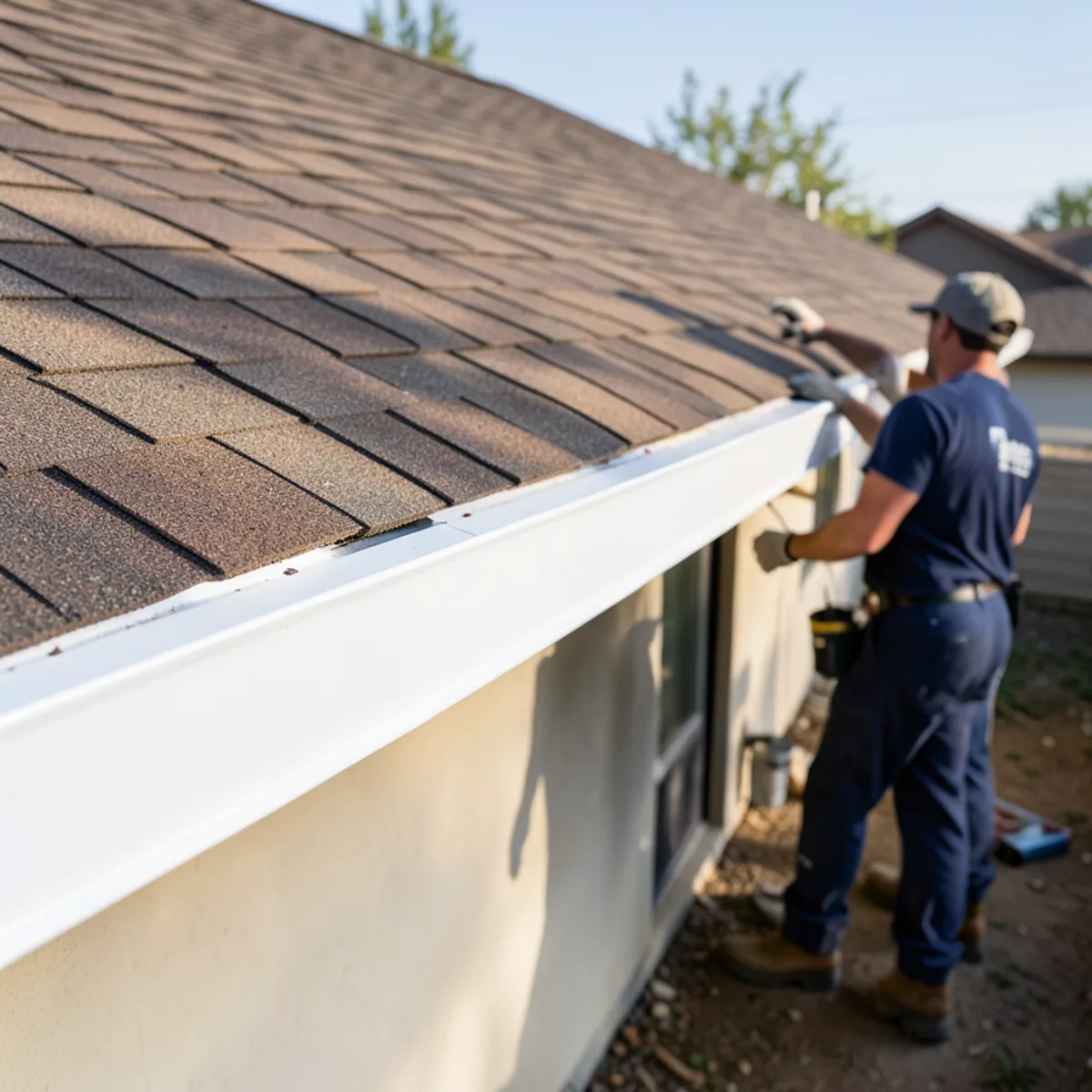
- Clean gutters at least twice a year and after major storms, the baseline from West Virginia University Extension. Under heavy trees, do it more often.
- Consider gutter guards on the worst stretches. They cut cleaning, though they do not end it.
- Add downspouts on long runs that overflow.
- Keep the paint intact, especially at joints and end grain.
- Check corners each fall, before winter rain sits on them.
Catch it while it is still paint
Peeling paint is cheap to deal with. Soft wood costs more, and rafter damage costs more again. Look along your roof edge once a year, push a screwdriver at any suspect spot, and fix the water source first. Found a soft spot behind your gutter? Call us for a free estimate. We will look at the board with you, trace where the water gets in, and confirm the repair scope in writing.
Sources
Common questions
Can I just paint over water-damaged fascia?
No, not if the wood is soft. Paint over decay traps moisture and hides the problem for a season or two. Test with a screwdriver first. If the wood is sound and only the paint failed, scrape, prime and repaint after you fix the water source. If it gives under pressure, the damaged section needs to come out.
Will my gutter need to come down to fix fascia?
Yes, usually, at least the section in front of the damage. The board cannot be cut out and replaced properly with a gutter hanging on it. Short repairs may mean removing one section, while long ones can mean a full rehang. It is also the right moment to correct slope and hardware, and we confirm that scope on the estimate.
How can I tell fascia rot from just dirty paint?
Clean a patch with soap and water. Dirt comes off, and it leaves sound paint behind. Water damage leaves bubbled or flaking paint, dark stains that stay, or soft wood under the surface. Finish with a screwdriver test at the lowest part of the stain and around any hanger. Firm wood means you likely have time.
Should a roofer or a gutter company fix fascia rot?
It depends on where the water gets in. A clogged, sagging or leaking gutter points to gutter work. Water coming down from under the shingles, with no drip edge to carry it into the trough, points to the roof edge. Trace the source first with a hose test, then have the board repaired and the gutter rehung in that order.
About the author
Written by the crew at V&V Seamless Gutters, the Austin gutter company run by owner Victor and his son Omar. Read more about us or see what customers say.
Related service: fascia and soffit repair in Austin. We also work in Pflugerville.
Have a gutter question this article did not answer?
- 4.5★ from 36 Google reviews
- Free estimates
- Run by owner Victor and his son Omar