
Local angles
Hill Country Flash Floods: Directing Roof Water Away From Your Foundation
By the V&V Seamless Gutters crew · Published and updated November 1, 2026
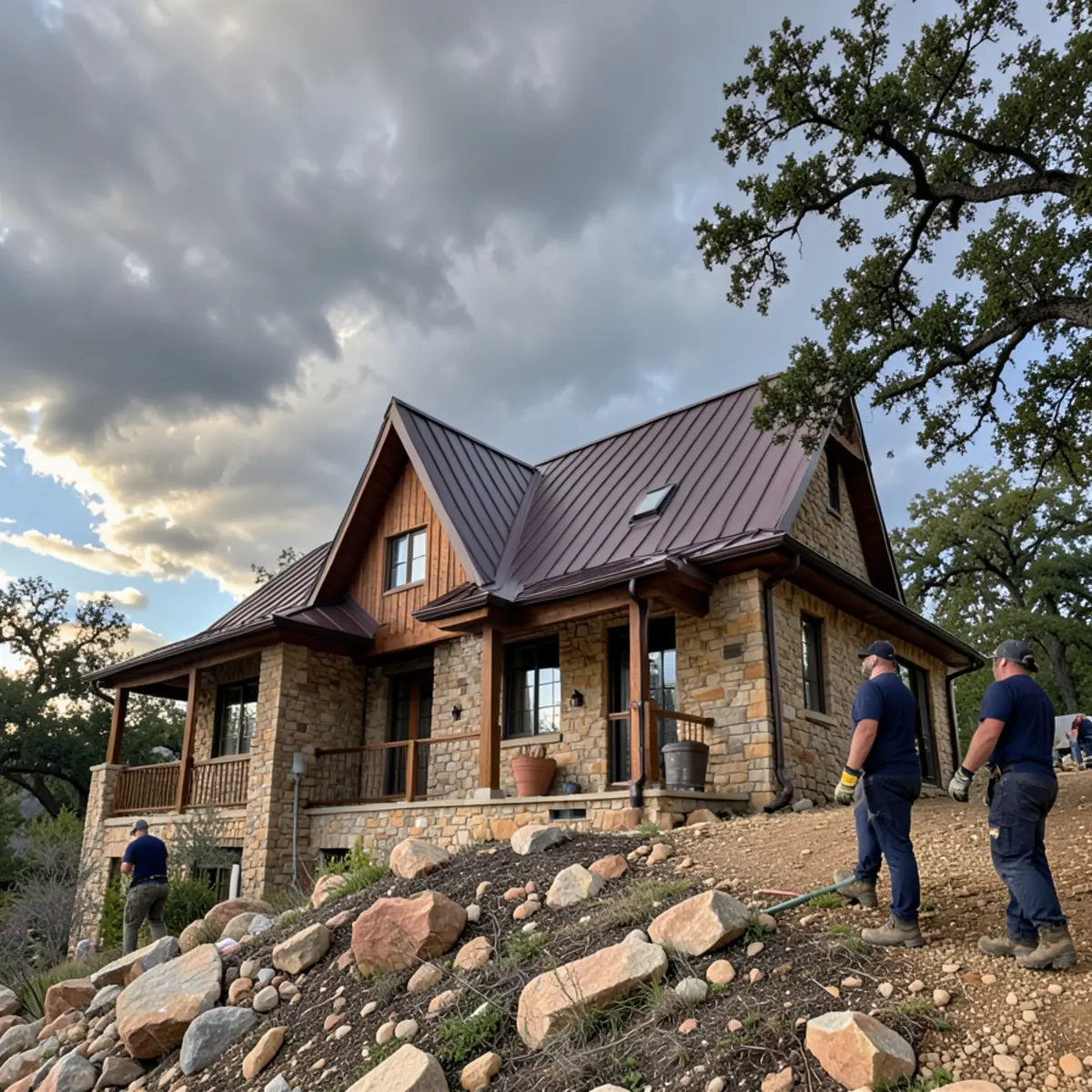
Foundation drainage in Austin starts at the roof: catch the rain in gutters, carry it down enough downspouts, and release it 6 to 10 feet from the foundation. Gutters will not stop a creek flood. They do control the thousands of gallons your own roof can drop beside your slab in a single Hill Country storm.
Why are Hill Country storms so hard on foundations?
Geography, mostly. Hydrologist Hatim Sharif, writing in The Conversation and reprinted by Scientific American in July 2025, describes Flash Flood Alley as a crescent running from near Dallas to San Antonio and then west. Warm Gulf air pushed up the Balcones Escarpment can produce heavy rain, and soils that do not soak up much water let it sheet off quickly.
The same logic applies at the scale of one house. The City of Austin notes that rainfall here has exceeded 5 inches in several hours. One inch of rain on 1,000 square feet of roof is about 620 gallons. At 5 inches, a 2,500-square-foot roof sheds roughly 7,800 gallons, and every drop leaves through a few downspouts. Where those downspouts end is the part of the storm you control.
How much water your roof sheds
| Roof area | 1 inch of rain | 5 inches of rain |
|---|---|---|
| 1,500 square feet | About 930 gallons | About 4,700 gallons |
| 2,000 square feet | About 1,250 gallons | About 6,200 gallons |
| 2,500 square feet | About 1,560 gallons | About 7,800 gallons |
| 3,500 square feet | About 2,180 gallons | About 10,900 gallons |
Now divide by your outlets. A 2,500-square-foot roof on four downspouts sends about 1,950 gallons through each one in that 5-inch storm. On two downspouts it is about 3,900. Spreading outlets around the house spreads the load on the soil, and that matters as much as the distance.
Not sure where your roof water ends up? Call us and we will walk the downspouts at a free estimate.
- 4.5★ from 36 Google reviews
- Free estimates
- Run by owner Victor and his son Omar
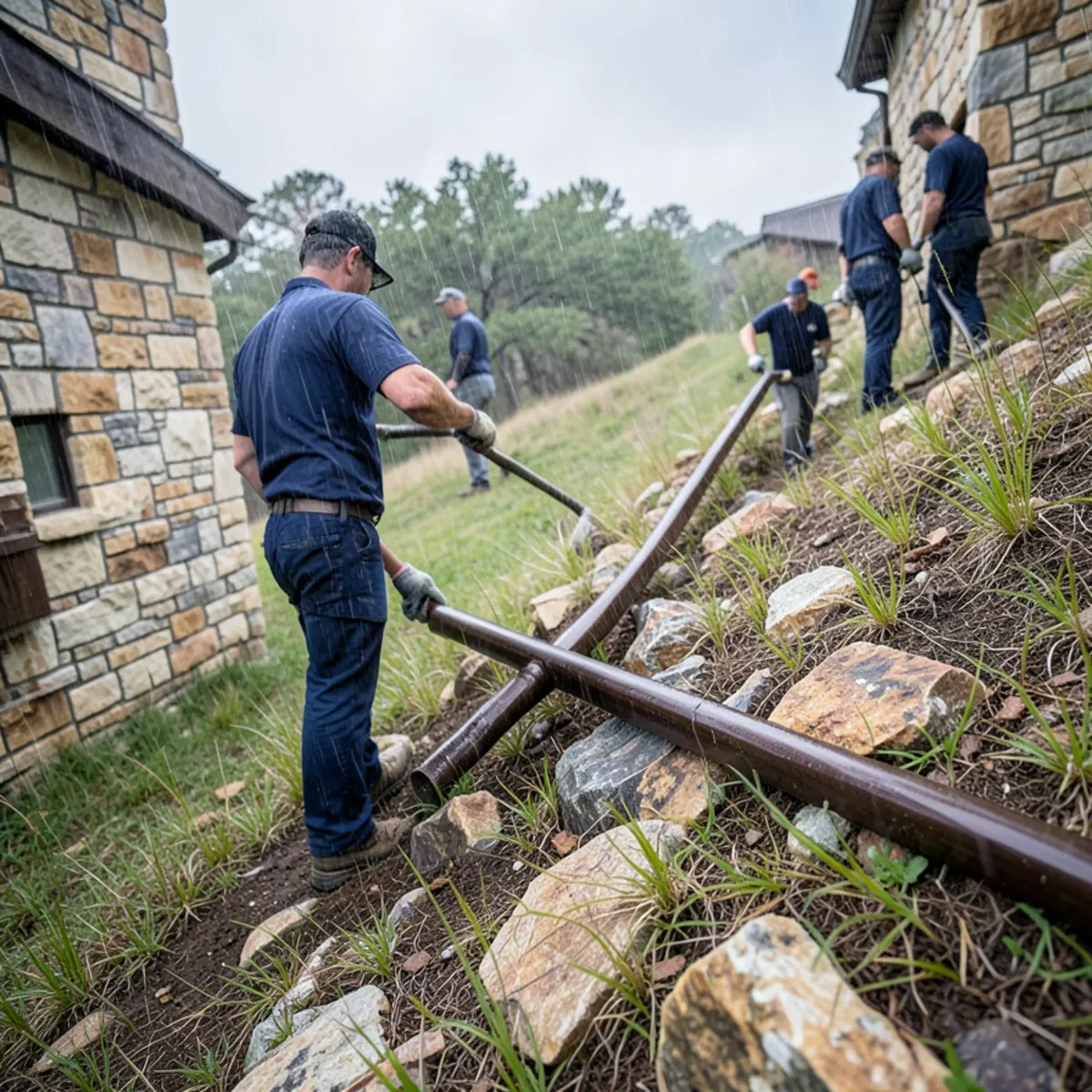
Foundation drainage in Austin: where should roof water go?
On clay soils, we want water released 6 to 10 feet from the foundation and never under 5 feet. The International Residential Code backs up the idea. Section R801.3 says that where expansive soils are known to exist, roof drainage must discharge not less than 5 feet from foundation walls or into an approved drainage system. Section R401.3 calls for the ground to fall at least 6 inches within the first 10 feet. Check which edition your city has adopted.
Expansive soil means clay that swells when wet and shrinks when dry, and that movement is hard on a slab. To see what is under your house, look it up in the USDA Web Soil Survey.
| Method | Reach | Good for | Watch for |
|---|---|---|---|
| Splash block | Does not reach 6 feet | Rock or hardscape that already drains away | Not enough on clay by itself |
| Concrete splash pad | Short | Stopping erosion at the outlet | Must tilt away from the house |
| Downspout extension | 6 to 10 feet | Most homes | Mowers and foot traffic knock them loose |
| Rain barrel | Stores only | Saving water for the garden | Fills fast; needs an overflow path |
Be honest about barrels. A 55-gallon barrel fills from less than 100 square feet of roof in a 1-inch rain, so it needs a planned overflow that also lands clear of the foundation. We have redirected gutters to rain barrels before, and it works best as a garden water source, not as flood control.
An extension only works if it stays on. A run that blocks the mower tends to get unhooked and left in the garage. Route it along a bed edge or a fence line where you can, so it stays out of the way and stays connected.
Steep lots, shallow soil and where the water runs next
Hill Country sites add a twist that flat clay lots do not have. In Bee Cave, custom homes with steep roofs sit on sloped ground, so water reaches the gutter fast and keeps moving once it lands. Follow it all the way. Discharge on the uphill side of a house can run straight back against the wall, so that side needs an extension long enough to carry water around the corner or across the slope.
Fast water on a slope also digs. Where an extension ends on bare ground, the stream can cut a channel back toward the house. A splash pad at the outlet spreads that water out, and we have set concrete pads under downspouts for customers. Turf or rock past the pad helps too. The point is to slow the water before it picks up soil.
Soil changes too. Clay rules apply where clay is mapped, and rockier ground to the west behaves differently, shedding water fast with little soaking in. The goal stays the same: get water moving away from the house and keep it moving.
Mind your neighbors. Texas Water Code section 11.086 bars diverting or impounding the natural flow of surface water in a way that damages another person's property by overflow. How that applies to a given downspout is a question for a lawyer, not a gutter installer, but the practical rule is plain: do not aim your water at the house downhill. Other cities and HOAs may have their own rules, so check locally.
How many downspouts does a steep roof need?
More than a builder usually hangs. We prefer about one per 30 feet of gutter rather than the common 40-foot spacing. The sizing baseline is 1 square inch of downspout per 100 square feet of roof, which gives a 2x3 about 600 square feet of coverage and a 3x4 about 1,200.
Steep slopes also throw water harder at the gutter, and in a downpour it can overshoot the front lip. That water misses the system completely and lands at the foundation. If you see it, 6-inch gutters paired with 3x4 downspouts are worth pricing, though adding downspouts comes first. Check seams too, since a leaking gutter drops water right at the wall.
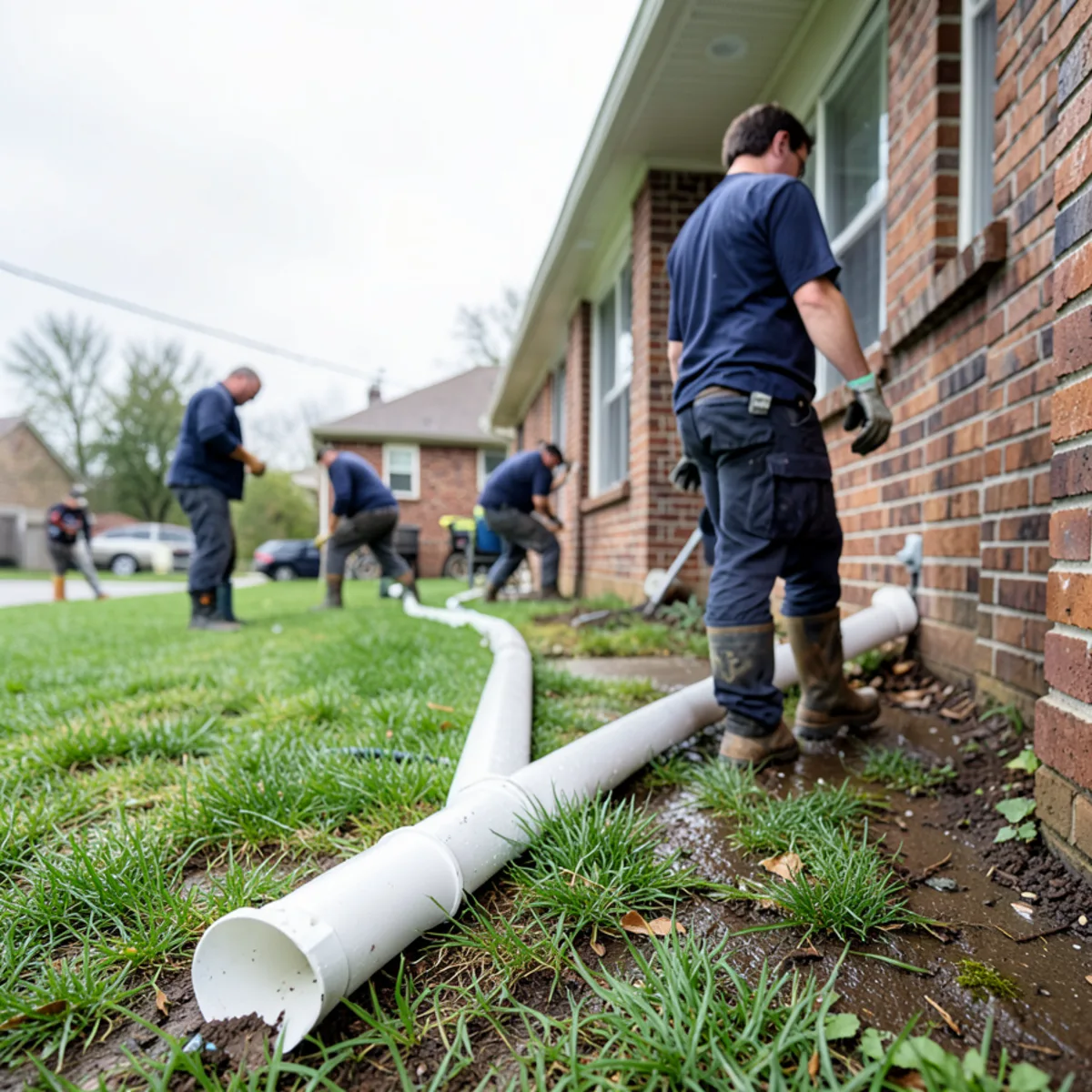
Where foundation drainage fails: the last few feet
Good drainage usually fails in the last few feet, not up on the roof.
- Extensions left disconnected after mowing, so the outlet dumps at the slab.
- Downspouts ending in flower beds, where edging and mulch hold water against the foundation.
- Splash pads tilted the wrong way after the soil moves.
- AC drain lines dripping at the slab. Tying the PVC into a downspout can move that water too.
- One corner carrying everything, with a whole roof slope feeding a single outlet.
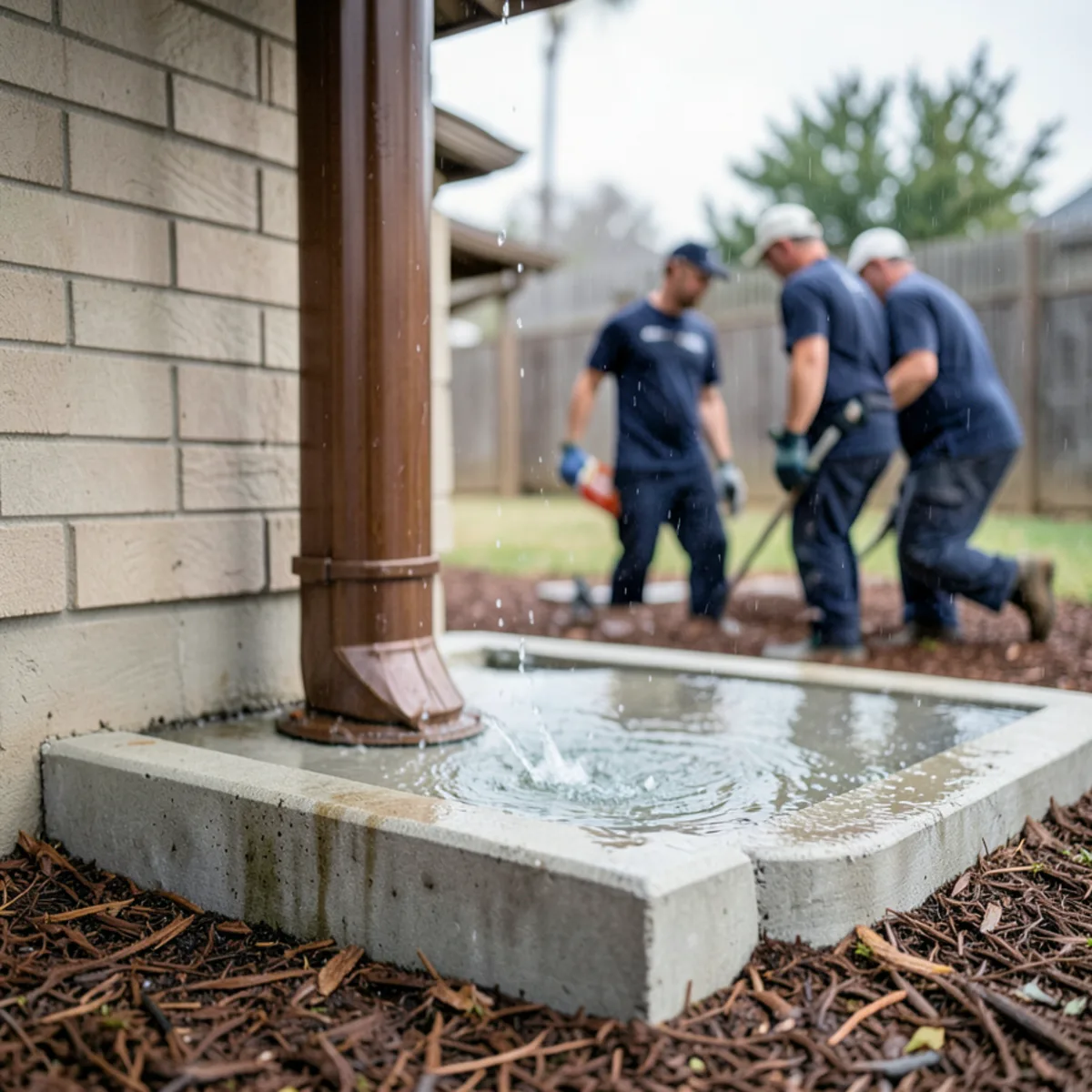
A storm-season check for your foundation
- Walk the house during a steady, safe rain and watch each downspout.
- Measure from the foundation to where the water actually lands.
- Look for pooling within 10 feet of the slab, or washed-out soil.
- Trace the path past the outlet. Does it move away, or swing back?
- Check that the ground and any pads slope away from the wall.
- Reconnect anything that came loose, and note what needs fixing.
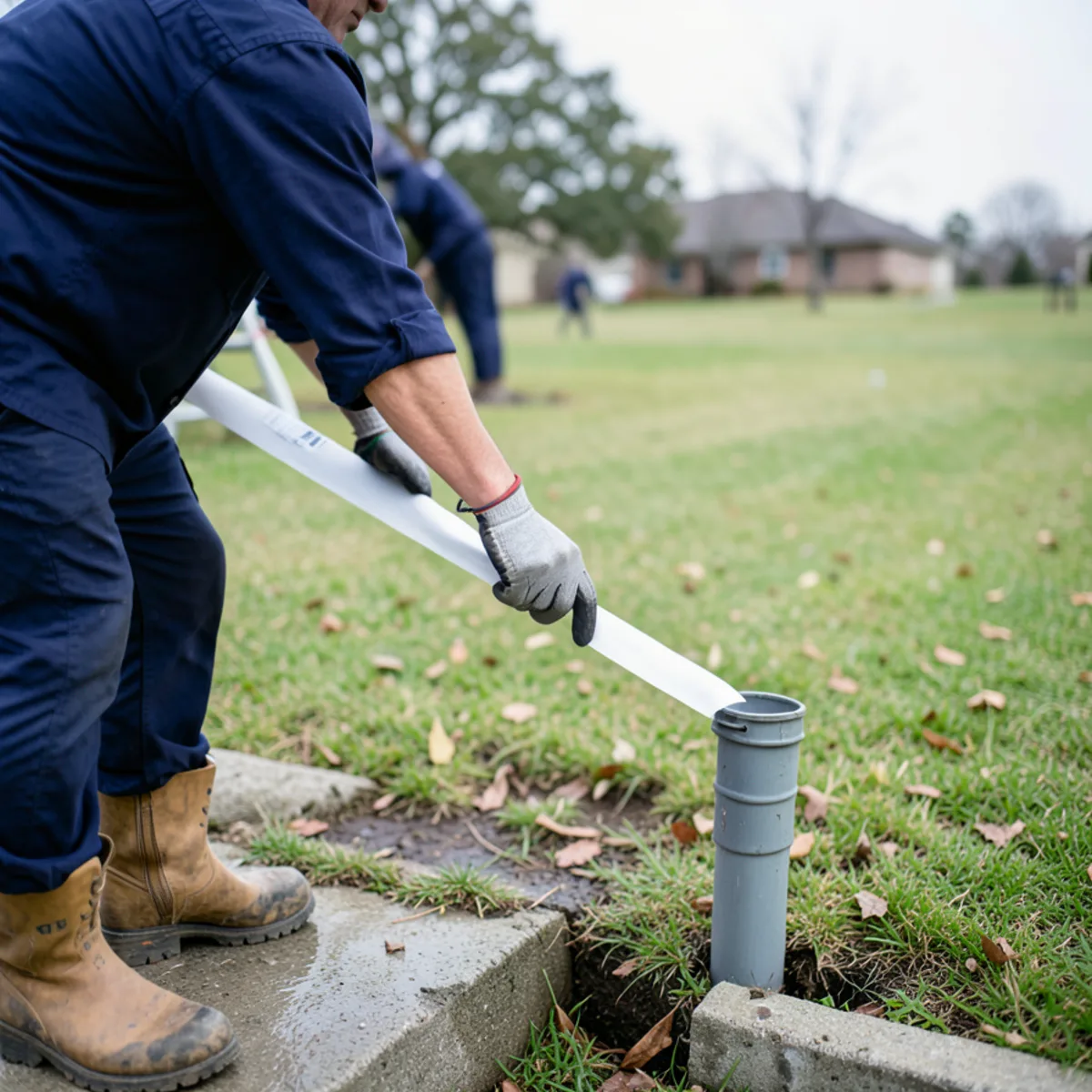
You cannot control what a Hill Country storm does to a creek. You can control your roof. Carry that water 6 to 10 feet out, make sure it keeps moving, and your foundation gets one less thing to deal with.
If your measuring came up short, or the water swings back toward the slab, call us. We will mark where each downspout should land and put the fix in a written quote.
Sources
- Scientific American: The geology of Texas' Flash Flood Alley explained (July 2025)
- City of Austin: Updating the rainfall period of record
- National Weather Service: Turn Around Don't Drown
- 2021 International Residential Code, Chapter 8 (R801.3)
- 2021 International Residential Code, Chapter 4 (R401.3)
- Texas Water Code section 11.086
- USDA NRCS Web Soil Survey
- Texas Department of Insurance: Texas homeowners policies report (2018)
Common questions
How far should a downspout discharge from my foundation in Austin?
Aim for 6 to 10 feet on clay soil, and never less than 5 feet. A splash block alone will not reach that far, so most homes need an extension. Also make sure the ground keeps falling away past the outlet, because water released 8 feet out can still run back if the yard tilts toward the house.
Will gutters protect my home from a flash flood?
No. Gutters manage the water that lands on your roof, not water rising from a creek or running across the land. They do reduce the load beside your foundation in a hard rain, which matters on clay. For real flood risk, follow local warnings, know your evacuation route and ask your agent about flood insurance.
Can I aim my downspouts at my neighbor's yard?
No, not if the water could damage their property. Texas Water Code section 11.086 bars diverting surface water in a way that damages someone else's land by overflow. On a sloped Hill Country lot, keep the discharge on your own ground and let it spread before the property line. For a real dispute, talk to a lawyer, and check HOA rules.
About the author
Written by the crew at V&V Seamless Gutters, the Austin gutter company run by owner Victor and his son Omar. Read more about us or see what customers say.
Related service: downspout installation in Austin. We also work in Bee Cave.
Have a gutter question this article did not answer?
- 4.5★ from 36 Google reviews
- Free estimates
- Run by owner Victor and his son Omar