
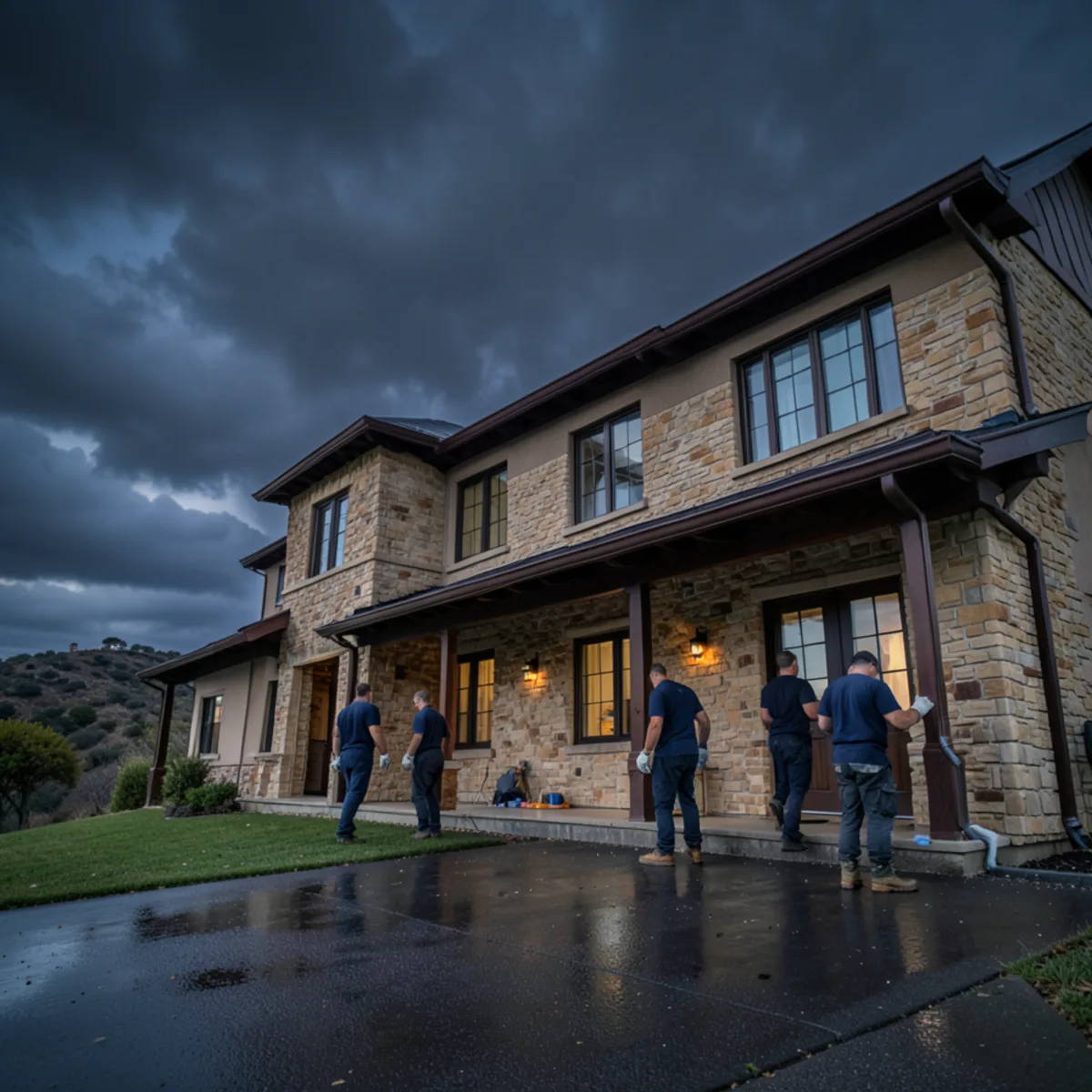
Oversized gutters are not an upgrade everyone needs. They are the right answer to a specific problem: more water reaching a run than a 5-inch profile and its outlets can move. If your home has that problem, the jump is worth it. If it does not, you are paying for metal that sits empty most of the year.
6 inch seamless gutters in Austin: when the upgrade pays
Austin's yearly rain is not the reason. NOAA's 1991-2020 normals show 36.3 inches over about 86 wet days. The reason is intensity: City of Austin records include more than 5 inches falling in several hours. A run sized for ordinary rain has nowhere to put that, and a steep or large roof delivers it faster.
The City's floodplain pages make the same point on a bigger scale. After NOAA's Atlas 14 study, the City says its maps move from a 10.2-inch, 24-hour storm to nearly 13 inches in some areas. That is a flood-mapping number and not a gutter rule, but it shows why sizing to the yearly total misses what the roof actually sees.
We start looking at 6-inch K-style when we see one or more of these:
- Roof area over about 3,000 square feet, the point our sizing check flags
- Heavy tree cover plus overflow in hard rain
- Two roof planes or a valley concentrating water on one run
- Steep pitches, where water hits the gutter with more speed
- Smooth panels, covered on our metal roof gutters page

Signs a 5-inch system has run out of room
The clearest sign is water sheeting over the front lip along the whole run, on a gutter you know is clean and pitched correctly. A spill at one corner means something else. Several other clues are worth photographing in the next storm:
- Overflow that came back after an outlet was added
- Erosion lines in the mulch under the drip edge, not under a downspout
- A valley firing water across the trough and over the far side
- An upper-roof downspout emptying onto a lower roof, doubling that lower run's load
- Oak leaves filling the trough between cleanings, so capacity is gone when the rain arrives
These stack up on specific houses. Long eaves on Hill Country homes around Dripping Springs and Bee Cave put a lot of roof on each run, and oak canopy on West Lake Hills lots adds the debris load. Any one sign alone is usually an outlet fix. Two or three together are when we price the bigger profile.
How much more water does a large capacity gutter carry?
More, but treat the percentages with care. Gutter sellers and installers often quote about 40 percent more than a 5-inch, and the number moves with what they measure. One common figure is about 2 gallons per foot for 6-inch against 1.2 for 5-inch. Those numbers come from companies that sell gutters, and none accounts for your roof pitch or a given storm.
The extra water has weight. At those figures a full 6-inch run holds roughly 17 pounds of water per foot, against about 10 for 5-inch. That is one reason we look at the fascia before recommending the size. Rotten board behind a bigger gutter is a problem you want to find first, and we confirm any fascia scope on the estimate.
What a 6-inch upgrade actually changes
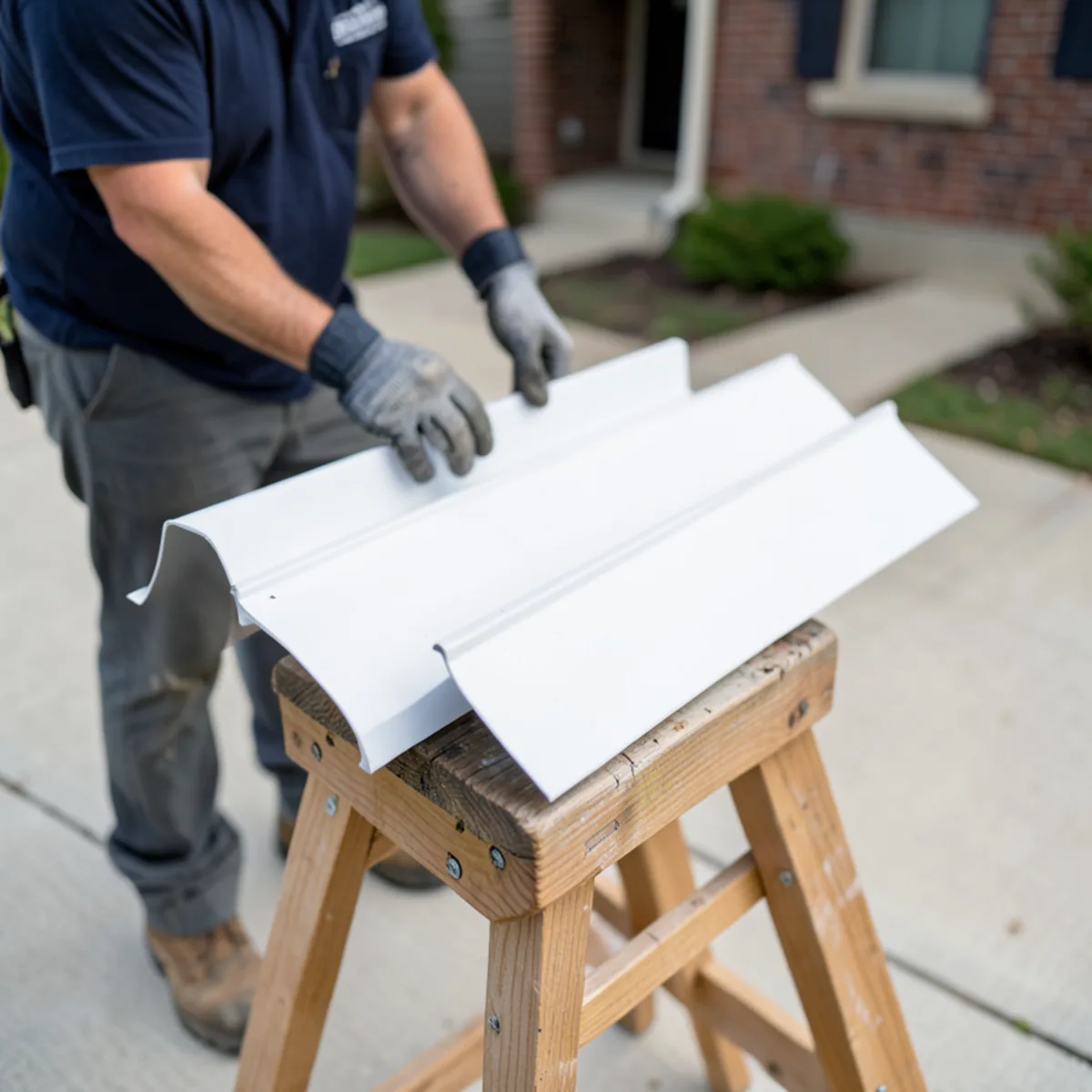
An upgrade replaces more than the trough. The wider profile takes its own hangers, miters, end caps and outlets, so parts from a 5-inch system do not carry over. Moving to 3x4 outlets also means new downspouts, elbows and straps on every wall that changes, and the extension at the bottom has to match the bigger opening.
Hanger listings for 6-inch K-style commonly show 24 inches on center, so ask for the spacing on the quote, since a full run weighs more than the size you are replacing. The wider face also reads heavier from the street. On a thin fascia that can matter, and a coil color close to the trim softens it. We talk through both at the estimate, and you can see the run marked out before anything gets formed.
- Roof planes and valleys reviewed, run by run
- 6-inch K-style aluminum, .027 or heavier, roll-formed at the house
- Matching 6-inch hangers, miters, end caps and outlets
- 3x4 downspouts with elbows and straps
- A fascia check first, with any repair scoped on the estimate
- Extensions set for the larger volume at each outlet
Add downspouts first, or go oversized?
Fix the outlets first in most cases. A gutter only drains as fast as its downspouts let it, so a wider trough feeding the same 2x3 opening gains less than people expect. Here is how we decide:
| What you see | First move | When 6-inch is the call |
|---|---|---|
| Overflow at one corner or valley | Add an outlet or upsize it to 3x4 | The run still spills after that |
| Overflow along the whole run | Check slope and clogs, then count outlets | Roof area outruns 5-inch even at one per 30 feet |
| Leaves bridging the outlet | Clean, consider a guard, use a 3x4 | Debris load stays heavy every season |
| Water behind the gutter | Check fascia and flashing | Rarely a size issue |
Seeing overflow? Send a photo from the next hard rain and call us about the fix.
- 4.5★ from 36 Google reviews
- Free estimates
- Run by owner Victor and his son Omar
Request a free quote
Calling is fastest: (208) 464-4195. Prefer to write? Use the form and we will get back to you.
Why a 6 inch K-style pairs with 3x4 downspouts
The 6-inch profile pairs with a 3x4 downspout. A 3x4 opens 12 square inches, twice a 2x3, and at the baseline of 1 square inch per 100 square feet of roof it drains about 1,200 square feet. Spacing still applies: about one outlet per 30 feet of gutter, more if a valley loads one spot.
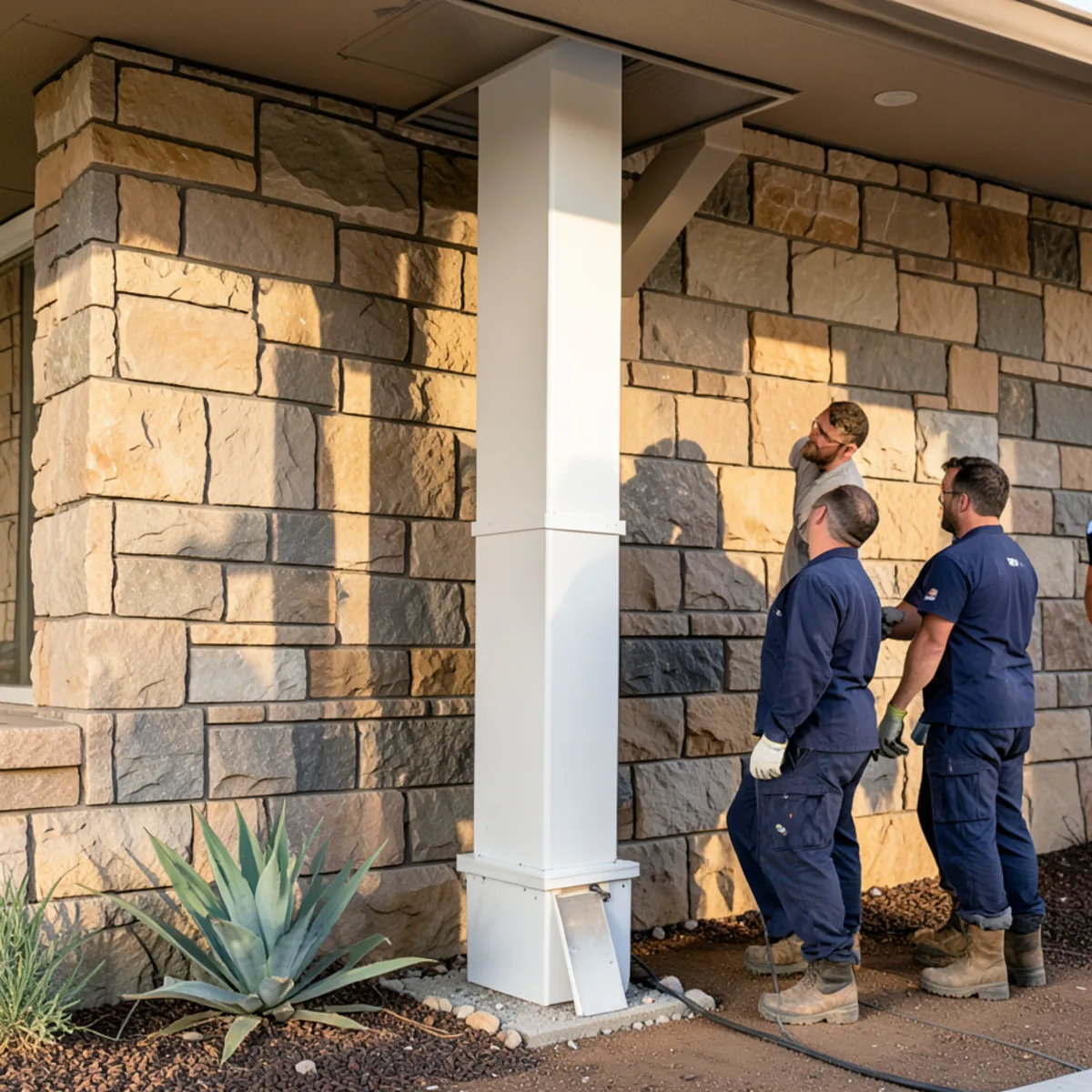
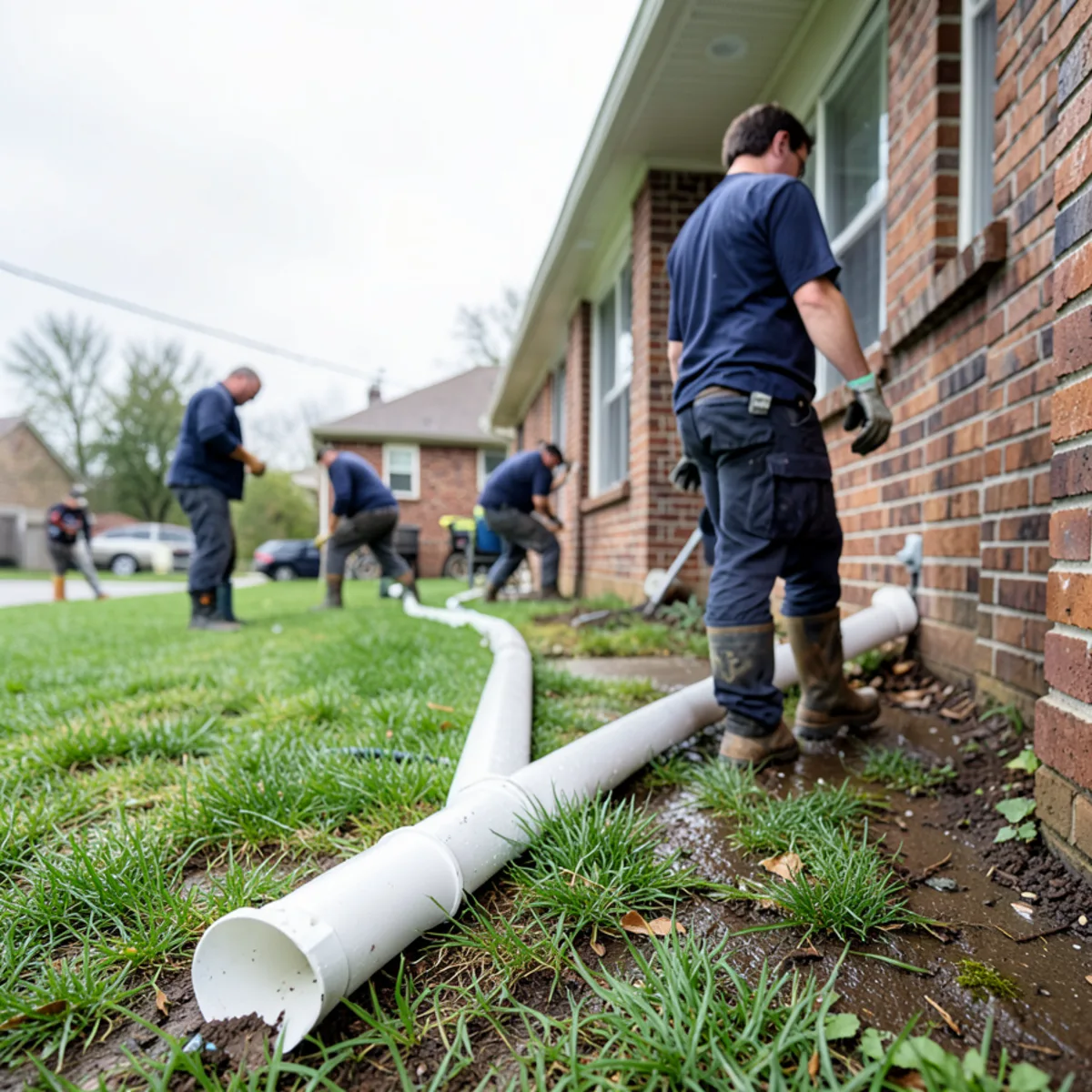
Bigger outlets also put more water on the ground in one place. On clay, that makes discharge the part to get right. Run a downspout extension 6 to 10 feet from the foundation and never under 5. Then look at where it ends, because concentrating a full roof's burst at one point can cut a channel in a lawn. Our downspout installation page goes through the options.
What do oversized gutters cost in Austin?
Published Austin prices do not break out 6-inch. Angi's and a national listing's Austin figures ($4 to $10 and $7 to $15 per linear foot installed) describe aluminum in general, so expect 6-inch to sit above the same job in 5-inch and have both priced on one quote. Neither is a V&V figure; the estimate is free and the quote is written.
Extra cost comes from wider coil, larger downspouts and elbows, and any added outlets. A partial upgrade can be smarter than a whole-house swap: put the larger profile on the back of the house that takes the valley and leave the rest at 5-inch, as long as the look works for you.
Ground work can swing the total as well. An old extension or buried line sized for a 2x3 will not take a 3x4 without an adapter or a new line. Second-story walls mean more footage of the larger downspout, and rotten fascia behind a heavier gutter is its own line.
Does a bigger gutter change the permit picture?
Not by size, as far as we can find. Nothing on the City of Austin's Work Exempt from Building Permits list separates 6-inch from 5-inch. The list covers wood fascia, trim and soffits and does not name gutters, so Development Services is the office to ask. The bigger outlet raises a different rule. Section R801.3 of the 2021 International Residential Code asks that water on expansive soils discharge at least 5 feet from foundation walls, or into an approved drainage system, so a 3x4 needs that reach on clay. For new construction or development inside Austin's jurisdiction, the City's Wildland-Urban Interface code also lists noncombustible gutters with leaf guards in Zones A, B and C. Lakeway, Cedar Park and other cities are outside that rule and set their own. HOAs may weigh in on a wider gutter face, so ask before you order.
Fitting a 6-inch run, and who does it
- We measure feet and roof planes, inspect the fascia and mark 3x4 outlets.
- Your written quote shows 5-inch and 6-inch side by side if that helps you decide.
- You approve in your own time.
- Old gutters come off, and the larger profile is roll-formed on site and pitched to each outlet.
- After cleanup we walk the discharge paths with you.
Why V&V for a sizing call
Reviews mention Victor's clear answers and Omar's patient explanations, which is what you want when the choice is not obvious. People also describe neat, careful work and crews that show up when they say they will.
Venkat V. calls Omar polite and patient in explaining the work, and Avijit R. says the team explained what needed doing and worked without cutting corners. Nisha M. describes a whole-house job done pretty quickly and within budget. That matters here, because a size decision is mostly a conversation. If one more outlet fixes your run, that is what the quote will say. If the roof really does outrun 5-inch, you will see the reasons, and both options priced line by line. The estimate is free, and you talk with Victor, the owner.
“Victor and Omar were very professional and have done a great job for my house gutter installation.. Omar was polite and patient explaining the work and have done a meticulous job .. will definitely recommend !!”
“…From the initial quote to the final installation, everything was handled professionally and efficiently. The team showed up on time, explained what needed to be done, and worked quickly without cutting corners.”
“Victor is very professional, very knowledgeable and pleasant to speak with. He did excellent work on gutter installation on whole house. Complete job was done pretty quickly and within my budge.”
We install heavy rain gutters from South Austin across the metro, including Cedar Park, Leander, Georgetown and Dripping Springs.
Sources
Common questions
Are 6-inch gutters too big for a normal house?
They can be. On a standard roof with light trees, 5-inch with enough downspouts does the job, and a larger face can look heavy on a thin fascia. Size should follow roof area and water load, not a sales pitch, and we will tell you at the estimate if 5-inch is enough.
Can you mix 5-inch and 6-inch gutters on one house?
Yes, where the roof calls for it. A back elevation that takes a valley can go 6-inch while the front stays 5-inch. Corners between the two sizes need planning, so it works best where runs already end at separate outlets. We mark that out on the estimate and price it as separate lines.
Do 6-inch gutters clog less?
They can, since a wider opening and 3x4 outlet give leaves more room to pass, but they still clog. Cleaning at least twice a year and after major storms remains the guidance from West Virginia University Extension. On a heavily treed lot, a metal mesh guard is worth pricing as well, because a larger gutter also holds more debris.
Do I need 6-inch gutters for a metal roof?
Often worth considering, but not automatic. Smooth panels shed water fast, so the deciding factors are roof area, pitch and valleys. Some metal roofs do fine with 5-inch and well-placed 3x4 outlets. Our metal roof page covers overshoot and placement, and we check the numbers on your roof.
Will a bigger gutter stop all overflow?
No gutter stops every overflow. In an extreme burst, any system can spill for a few minutes. A correctly sized run should handle hard rain without sheeting over the edge for long. If it does that repeatedly, look at slope, clogs and outlets first, then send us a photo or video so we can see what is happening.
Related services
From the blog
Where we do this work
Austin and these nearby areas, among others on our service areas page:
- Gutter service in Cedar Park: Family neighborhoods where gutter guards are popular.
- Gutter service in Leander: New construction needing add-on gutters.
- Gutter service in Georgetown: Retirees seeking low-maintenance guards.
- Gutter service in Dripping Springs: Hill Country homes with long roof runs.
- Gutter service in West Lake Hills: Steep lots and heavy oak canopy mean constant gutter debris.
- Gutter service in Lakeway: Hillside homes with cedar and oak debris.
- Gutter service in Bee Cave: Hill Country custom homes with steep roofs.
- Gutter service in Lago Vista: Lakeside hillside homes with heavy cedar debris.
- Gutter service in Sunset Valley: Small enclave with mature trees.