
Emergency guides
Water Pouring Over Your Gutters During Rain: Quick Checks
By the V&V Seamless Gutters crew · Published and updated November 1, 2026
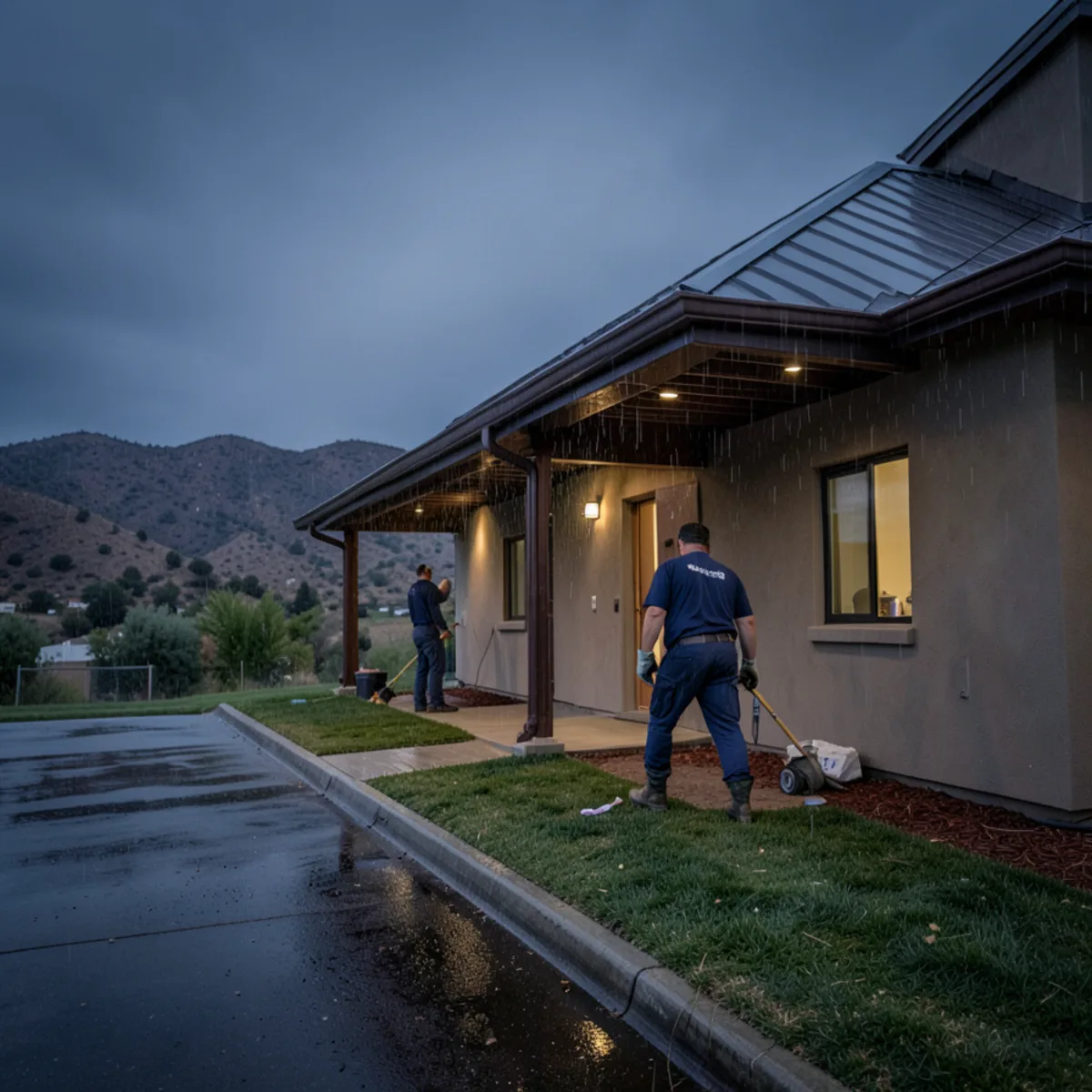
Water overflowing gutters during rain almost always points to one of four things: a clog, a blocked downspout, too little downspout capacity, or a run that has lost its slope. You can narrow it down from the ground in five minutes, with no ladder. Where the water comes over tells you most of what you need to know.
Why is water overflowing your gutters?
Go outside while it is raining and stand where you can see the whole run. Do not climb anything. Then match what you see to this table. If there is lightning, wait for the next steady rain.
| Where the water comes over | Likely cause | What to check next |
|---|---|---|
| One spot, the same spot every storm | A sag or a pile of debris | Sight along the run for a dip or a pulled hanger |
| Right beside the downspout | Clogged outlet or elbow | Watch how much water leaves the bottom |
| The end farthest from the downspout | Slope running the wrong way | Look for standing water after the rain stops |
| The whole run, only in the hardest rain | Not enough downspout capacity | Count downspouts and compare to the roof area |
| An inside corner where two roof slopes meet | Valley water shooting past the gutter | Watch where the sheet of water lands |
| Behind the gutter, down the fascia | Gap at the roof edge or a gutter pulling away | Look for dark streaks and wet wood |
Seen the overflow but cannot find the cause? Call us and describe where the water comes over.
- 4.5★ from 36 Google reviews
- Free estimates
- Run by owner Victor and his son Omar

Quick checks you can do from the ground
- Read the downspout. A healthy one runs a strong, steady stream. A brimming gutter over a trickling downspout means the blockage is at the outlet or in an elbow.
- Note the timing. Overflow in every light rain means a clog or a slope problem. Overflow only in a cloudburst points to capacity.
- Check after the rain stops. Water should clear out of the gutter. Drips from one low point an hour later suggest standing water and a sag.
- Look for streaks. Dirty lines down the outside face of the gutter show where it overtops, even on a dry day.
- Walk the foundation. Pooling, washed-out mulch or a trench in the bed marks where the overflow lands.
A correct run drops about 1/4 to 1/2 inch per 10 feet. That is close to 4 inches across a 30-foot wall, too little to see from the lawn but plenty for a hanger failure to undo. If a run looks level or tilts away from the downspout, it needs to be reset.
When a clean gutter still overflows
This is the case people misjudge. The gutter is empty, the downspout runs freely, and water still pours over. The problem is how fast the roof delivers water, not how much falls in a year.
Austin's normal annual rainfall is 36.3 inches over about 86 wet days, according to NOAA's 1991-2020 normals. That total is modest. The City of Austin notes that rainfall has exceeded 5 inches in several hours. A burst like that is what tests a gutter.
Capacity comes down to downspouts. The working baseline is 1 square inch of downspout for every 100 square feet of roof. A 2x3 downspout has 6 square inches and handles about 600 square feet. A 3x4 has 12 square inches and handles about 1,200. We prefer about one downspout per 30 feet of gutter rather than the common 40-foot spacing.
So add downspouts before you assume the gutter is too small. A second outlet on a long run, or a move from 2x3 to 3x4, often solves the problem for far less disruption than new gutters. Our downspout installation page covers placement.
A capacity check you can do with a tape measure
You can estimate this from the ground. Multiply the length of the eave by the distance from the eave to the ridge, measured flat on the plan and not up the slope. That gives you the roof area feeding that gutter. Say a 40-foot eave and 20 feet to the ridge. That is 800 square feet, and one 2x3 is good for about 600, so the run is short on outlets. A second 2x3 fixes it, and so does a single 3x4, though two outlets also shorten the trip the water has to make.
Do that sum for each downspout on the house. If an upper roof drains onto a lower one, add the upper area to the lower total. That is the run that tends to overflow first.

Is some overflow normal in a cloudburst?
A little can be. No home gutter system is sized for every storm on record. If water spills for a few minutes at the peak of a downpour, lands clear of the foundation and stops when the burst passes, watch it. If it happens every storm, soaks the fascia or lands against the slab, fix it.
Roof shape plays a part. In Rollingwood, rebuilt homes with modern roof lines can gather a large roof area into a single valley, and that one point takes more water than the gutter was laid out for. The fix there is usually about where the water lands, not the size of the whole system.
Overflow causes that hide in plain sight
A few causes come up again and again in the trade, and most are cheap to rule out.
- Clean gutter, packed elbow. The trough looks fine and the plug sits in the first bend, out of sight.
- Valley overshoot. Water from an inside corner flies past the outer lip. A small diverter or a change at the corner can keep it in.
- Sagging runs. One failed hanger creates a pond, and the pond's weight pulls on the next hanger.
- Too few outlets. Long runs with a single downspout at one end, common on builder-grade work.
- A filmed-over guard. If you have guards, pollen and grit can settle on fine mesh, and rain skates across the top and off the edge. A rinse or a brushing is the first thing to try.

Why overflow matters on Central Texas clay
An overflowing gutter is doing the one thing gutters exist to prevent: dropping water beside the house. West Virginia University Extension warns that clogged gutters lead to damage around windows, doors and the foundation. On clay soils we want roof water released 6 to 10 feet from the foundation, never under 5 feet. A sheet of water coming over the lip lands a foot or two out, and the fascia behind a chronic overflow stays wet for days.
When the water comes down behind the gutter
A wet line down the fascia under a dry gutter lip is a different problem. Water is getting between the roof edge and the back of the gutter, either because the run has pulled off the board or because the roof edge does not reach into the trough. More downspouts will not help. The fix starts with rehanging the run on sound wood, and our fascia and soffit repair page covers what happens when the board has gone soft. We confirm that scope on the estimate.
Clean, repair or resize?
- Clean it when debris or a plugged elbow is the cause. Start with downspout unclogging if the trough looks clear.
- Repair it when hangers, slope or seams have failed. That is ordinary gutter repair work, and a free estimate covers the fascia check.
- Resize it when a clean, well-sloped run still overflows every hard rain. Add downspouts first, then look at gutter size.
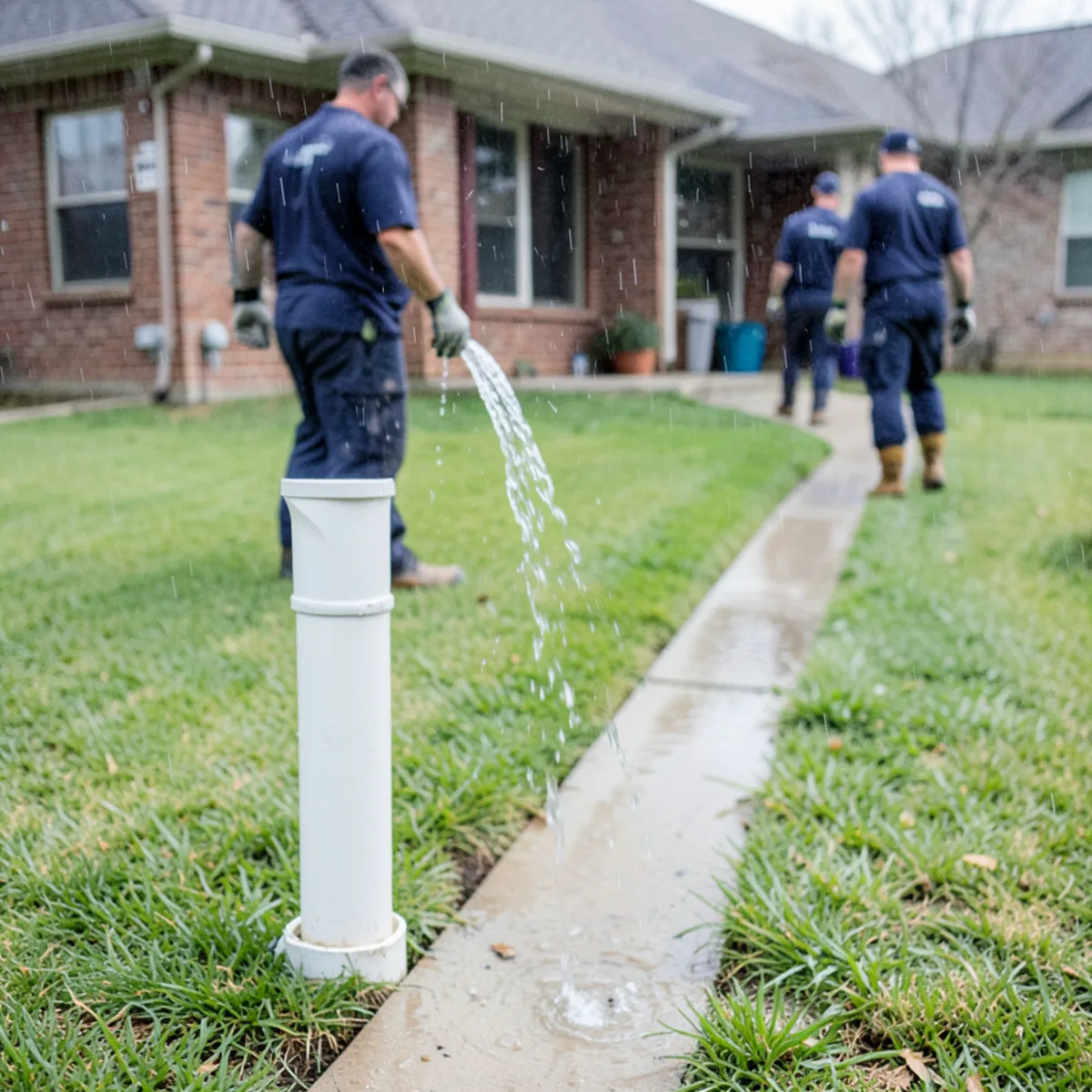
Next time it rains, spend five minutes outside watching. Where the water comes over, and how hard it has to rain before it does, will show if the fix is a scoop, a hanger or another downspout.
If you have watched a storm and still cannot name the cause, call us. Tell us where the water comes over and how hard it was raining. We will check the hangers, slope and outlets at the free estimate and put the fix in writing, so you pay for the cause and not a guess.
Sources
Common questions
Why do my gutters overflow right after they were cleaned?
The likely culprits are a plug left in the downspout elbow, a low spot in the run, or not enough downspout capacity. Clearing the trough does not clear the bend below it. Check whether a full stream leaves the bottom of the downspout during rain. If it does and the gutter still spills, look at slope and outlet count next.
Should I install bigger gutters if mine overflow?
Not as the first move. Most overflow in a clean gutter comes from limited drain capacity, so adding a downspout or going from 2x3 to 3x4 is the better first step. Moving from 5-inch to 6-inch K-style makes sense when the roof area is large and added outlets are not enough. We pair 6-inch gutters with 3x4 downspouts.
Can overflowing gutters damage my foundation?
Yes, if it happens storm after storm. Water that tops the lip lands a foot or two from the wall, and on Central Texas clay we want it released 6 to 10 feet out. Look for pooling, washed-out mulch or a trench under the spill point. Fix the overflow first, then check that each downspout carries water clear of the slab.
About the author
Written by the crew at V&V Seamless Gutters, the Austin gutter company run by owner Victor and his son Omar. Read more about us or see what customers say.
Related service: gutter repair in Austin. We also work in Rollingwood.
Have a gutter question this article did not answer?
- 4.5★ from 36 Google reviews
- Free estimates
- Run by owner Victor and his son Omar