
Local angles
Why Blackland Clay Makes Downspout Placement So Important
By the V&V Seamless Gutters crew · Published and updated November 1, 2026
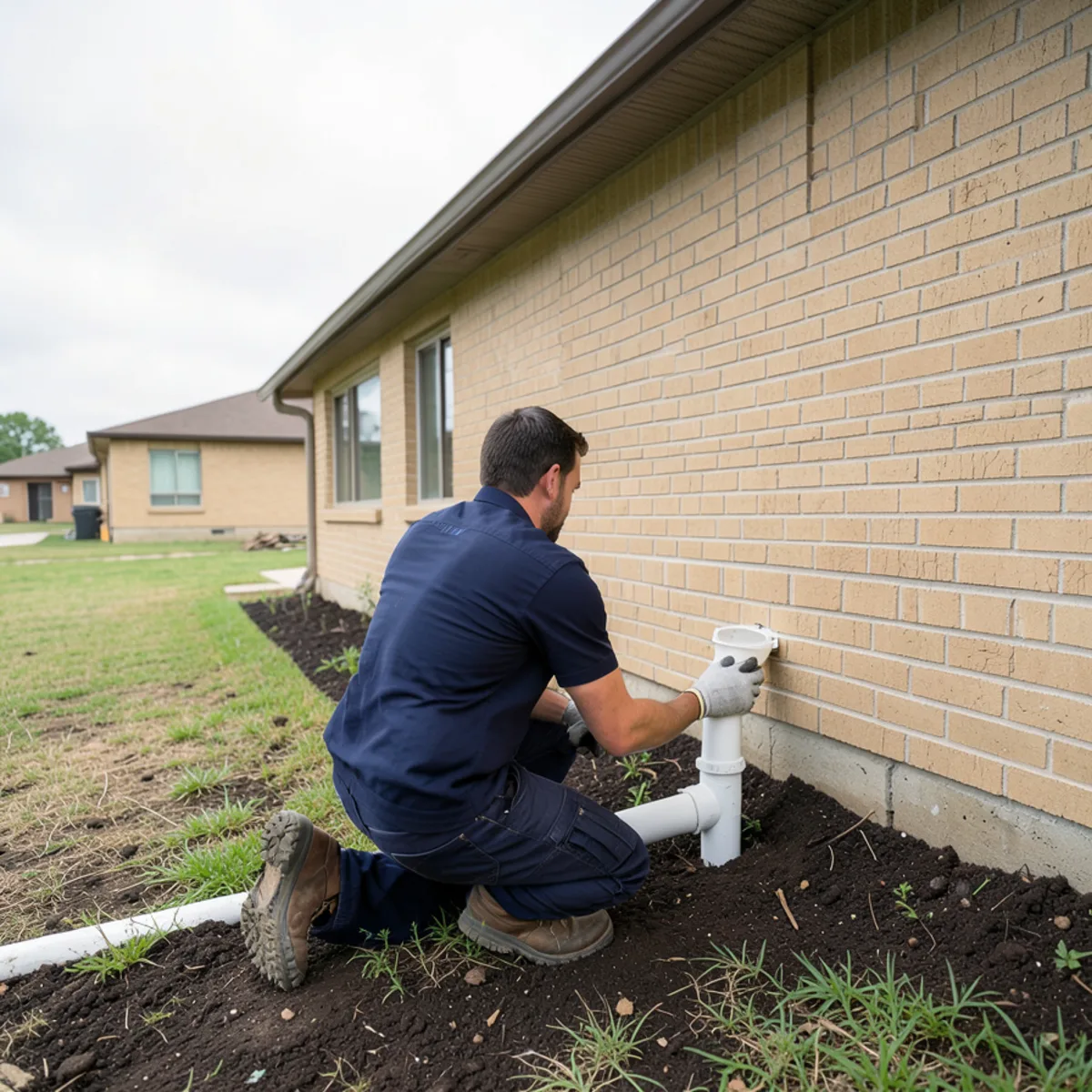
On clay soil, gutters in Austin matter less for the rain they catch than for where they drop it. Blackland clay swells wet and shrinks dry, so a downspout emptying beside the slab can soak one corner of the foundation. Send discharge 6 to 10 feet out, split it across more downspouts, and never land it closer than 5 feet.
What is Blackland clay, and why does it move?
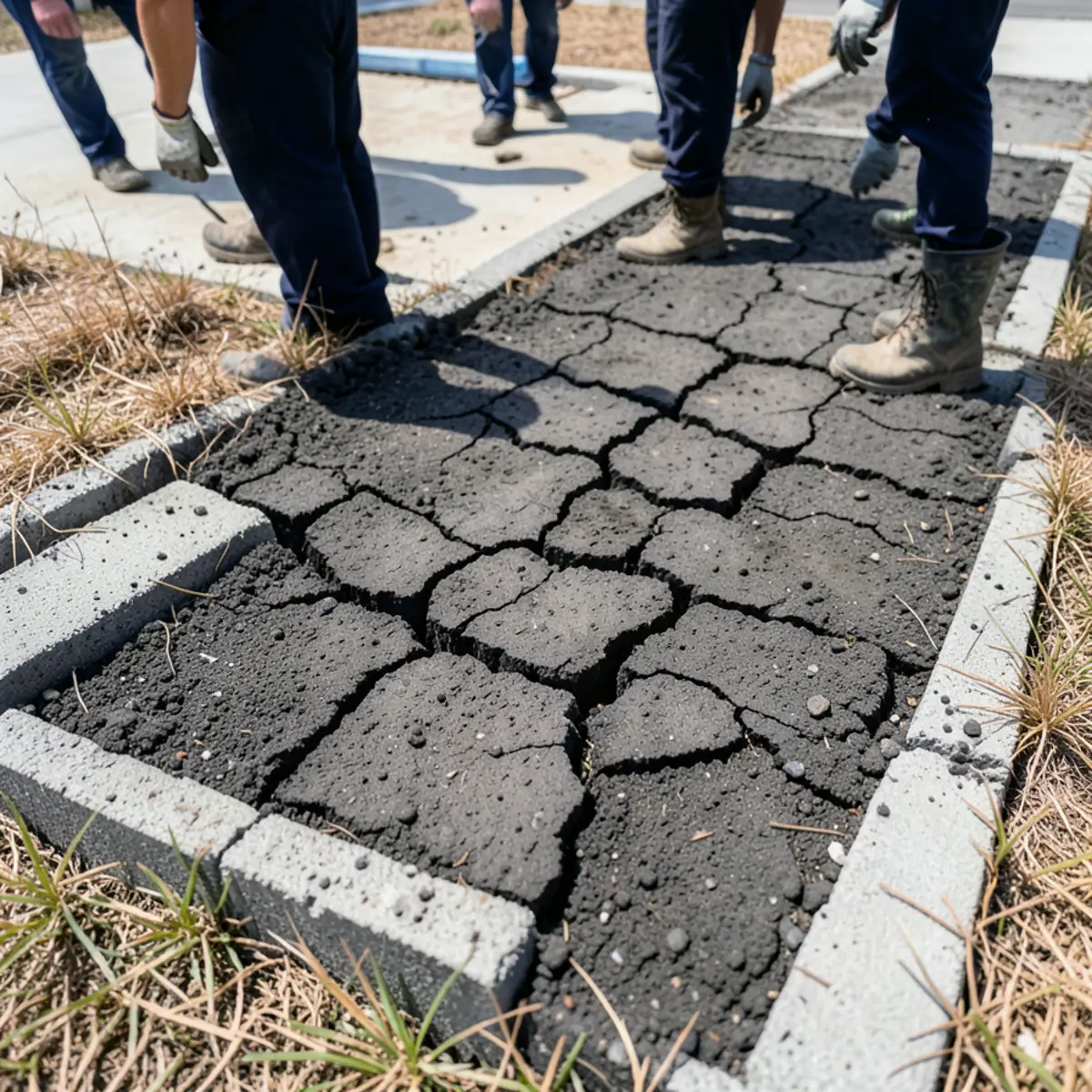
The Blackland Prairie is a belt of dark clay soil running through Central Texas. Its signature soil is the Houston Black series, and the USDA NRCS official series description places that soil's type location in Travis County. The same description lists high shrink-swell potential, very slow permeability, and cracks 1/2 to 4 inches wide at a depth of 12 inches during dry periods.
Put plainly, this clay takes on water and gets bigger, then gives it up and pulls apart. Very slow permeability means water does not pass through quickly, so a spot that gets soaked tends to stay wet while ground farther from the outlet dries out and cracks. A house sitting on that ground rides along. Movement alone is not the worst of it. Uneven movement is. A Texas Department of Licensing and Regulation bulletin on expansive soils names surface drainage among the things that keep soil moisture from swinging.
Downspouts ending at the wall on a clay lot? Call for a free estimate and a written quote on moving them.
- 4.5★ from 36 Google reviews
- Free estimates
- Run by owner Victor and his son Omar
How much water does one downspout put in one spot?
More than most people guess. The USGS puts one inch of rain over an acre at about 27,154 gallons, which works out to roughly 0.62 gallon per square foot of roof. A 2x3 downspout is sized to drain about 600 square feet of roof. So one inch of rain sends about 370 gallons to a single outlet.
Run that against Austin's normal 36.3 inches a year from NOAA and the ceiling is about 13,500 gallons a year through one downspout. Real numbers land lower because some rain evaporates or blows off. The point stands. Without gutters, roof water spreads along the whole drip line. With gutters, you have gathered it into a few outlets, and each outlet is now a decision about where thousands of gallons go. Good placement makes that a benefit. Bad placement makes it worse than having no gutters.
Clay soil gutters in Austin: where each downspout should go
Start with the lot, not the gutter. Stand at each planned outlet and ask where water goes once it leaves the pipe.
| Outlet location | Problem on clay | Better move |
|---|---|---|
| Inside corner of two walls | Water is boxed in against the slab on two sides | Pipe it past the corner to open ground that falls away |
| Beside an AC pad or sidewalk | The slab acts as a dam and holds water at the foundation | Route around or under it and release beyond the concrete |
| Flower bed with edging | Edging traps water in loose soil right at the wall | Extend past the bed |
| Edge of a sloped driveway | Usually fine if the drive falls toward the street | Release onto the slope, away from any neighbor's fence line |
| Downhill side of the lot | Often the easiest place to release water | Use it, with a 6 to 10 foot run |
- Distance. Aim for 6 to 10 feet from the foundation. International Residential Code section R801.3 sets the floor: where expansive soils are known to exist, roof drainage goes to the ground at least 5 feet from foundation walls, or to an approved drainage system. Your city's adopted version controls.
- More outlets. We work to about one downspout per 30 feet of gutter rather than the common 40. Each extra outlet means fewer gallons in any one spot.
- No splash block alone. A splash block does not reach 6 feet. It slows the water and leaves it near the wall.
- Check the fall. The same code calls for grade to drop at least 6 inches within the first 10 feet, with limited exceptions. An extension laid on flat or backward-sloping ground just moves the puddle.
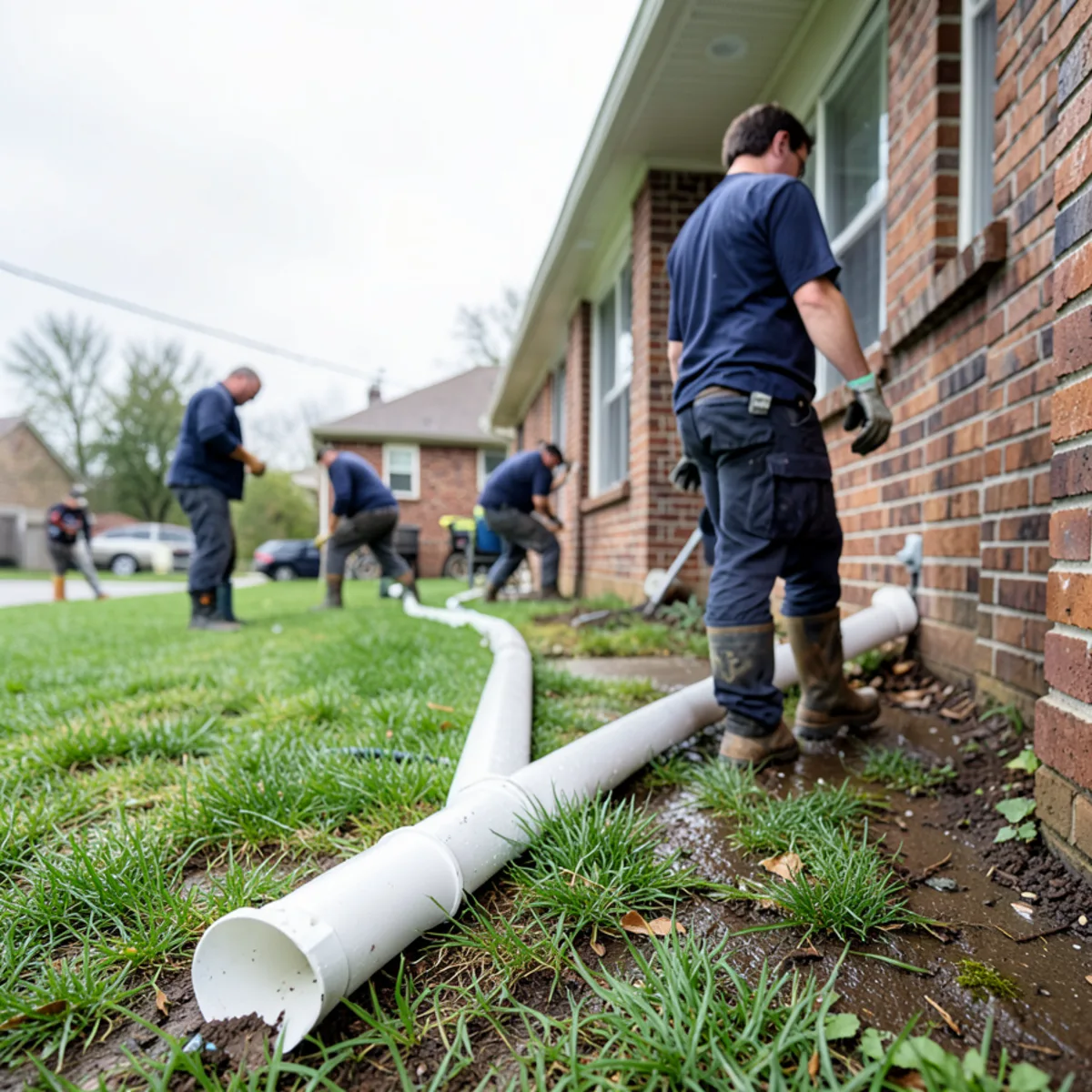
For new runs and relocations, downspout installation is where this gets settled, and it belongs on the quote as line items. If the outlets are fine but the water backs up, start with downspout unclogging. On a full replacement, plan the outlets first, then the gutter installation around them.
Does this apply in Cedar Park?
Sometimes, and you should check rather than assume. The Handbook of Texas says the Balcones Escarpment runs through Williamson County from Jarrell through Georgetown to Round Rock. East of it, soils are mostly dark blackland. West of it, they are loamy with limey subsoils. Cedar Park lies west of Round Rock on the hillier side, so many lots there will not be classic Houston Black.
That does not settle your lot. NRCS Web Soil Survey is free: draw your property on the map and read the soil names and ratings for it. Then treat the placement rules as a low-cost habit. Moving roof water away from a slab is sensible on almost any soil, and the extension costs little compared with what it protects.
How drainage on a clay lot breaks down over time
The same patterns come up again and again, and they are worth checking at your own house.
- Original builder-grade downspouts ending at the wall with a splash block and nothing else.
- Extensions that were there once but got kicked off by mowing and never went back on.
- Flexible plastic extensions crushed flat by foot traffic, so water pools at the elbow.
- Soil that has settled against the slab, so the first few feet now run toward the house.
- An AC condensate line dribbling at the foundation all summer. It keeps one patch wet through the driest months. Sometimes that PVC can be tied into a downspout so it discharges with the rest.
Surface extension, buried line or splash pad?
Customers ask which one to choose. Each option fixes one headache and adds another, so pick the one you will keep working.
| Option | What it does well | What it asks of you |
|---|---|---|
| Straight metal extension | Easy to see and check, and it carries water past the 6-foot mark | It sits where mowers and feet go, so it gets knocked off |
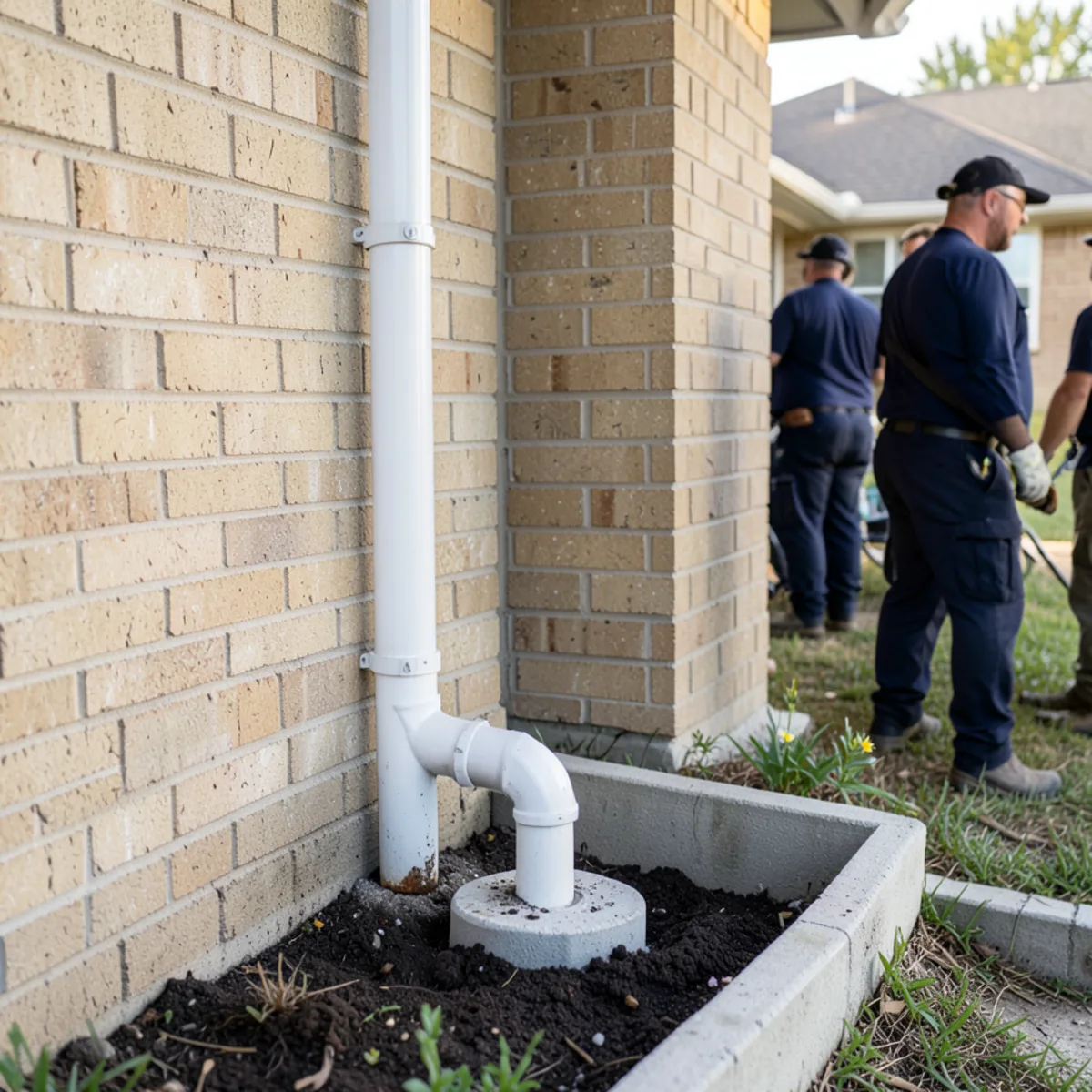
| Concrete splash pad | Stops the outlet from digging a hole and takes foot traffic | It does not carry water far, so the ground must fall away on its own |
| Buried line | Clear lawn and nothing to trip on | It must fall the whole way, it is harder to inspect, and a leak stays out of sight |
| Rain barrel | Holds back the first gallons of a storm | Once full it spills where it stands, so the overflow needs its own route |
Customers have had us add concrete splash pads, tie AC drain PVC into a downspout and redirect gutters to rain barrels. Each is a fair request on clay, as long as the water still ends up on ground that falls away. A shorter extension that stays attached beats a long one that comes off at the first mow, as long as it clears 6 feet.
Looks are the other trade-off. The best outlet for the water is not always the best spot on the wall, and a pipe on a front corner can bother you more than a wet side yard. Drainage should win that argument on clay. We mark downspout locations at the estimate, so you can see where each pipe lands before you approve anything, and a color matched to the trim makes a visible pipe easier to live with.
Narrow side yards are the hard case, with a fence on one side, a slab on the other and little fall. Do not solve that by aiming water at the neighbor. Texas Water Code section 11.086 addresses surface water diverted so that it damages another property by overflow, so run the pipe to the front or back of the lot instead.
What should you fix first?
- Walk the house during a steady rain and note where each outlet's water actually goes.
- Put back or lengthen any missing extension. This is the cheapest fix on the list.
- Move outlets out of inside corners and away from concrete that traps water.
- Add a downspout on any long run that overflows or dumps too much in one place.
- Fix grade where soil has settled toward the slab.
If you already see stair-step cracks in brick or doors that stick, talk to a structural engineer or foundation specialist first. A gutter installer can move water. We cannot diagnose a foundation.
Put the water where the clay can take it
Gutters on clay are a water-placement job. Spread the discharge, carry it past the 6-foot mark, make sure the ground falls away, and check the outlets once a year. Not sure where yours should land? Call us. The estimate is free, we mark each outlet on the walk, and every change goes on a written quote.
Sources
- USDA NRCS Official Soil Series Description, Houston Black
- USDA NRCS Web Soil Survey
- USGS Water Science School, how much water falls during a storm
- NOAA NCEI, U.S. Climate Normals 1991-2020
- International Residential Code 2021, Chapter 8, section R801.3 (Texas viewer)
- International Residential Code 2021, Chapter 4, section R401.3 (Texas viewer)
- Handbook of Texas (TSHA), Williamson County
- Texas Department of Licensing and Regulation, expansive soils bulletin TB-1001
- Texas Water Code section 11.086
Common questions
How far should downspouts discharge on expansive clay soil?
Aim for 6 to 10 feet from the foundation, and never under 5 feet. International Residential Code R801.3 sets 5 feet as the minimum where expansive soils are known to exist, unless the water goes to an approved drainage system. On Blackland clay, the extra feet give you margin for settled grade and bent extensions.
Can a buried drain pipe replace a downspout extension on clay?
Yes, if it keeps falling the whole way and releases at the surface somewhere lower than where it started. A buried line that sits flat holds water and silt, and on clay it can leak right beside the slab. Flush it with a hose once a year and check that water comes out the far end.
Should every downspout on a clay lot have an extension?
Yes, unless the outlet already releases onto paving or ground that carries water well away from the house. Check each outlet on its own, because the fall of the yard changes from corner to corner. On clay, an outlet that dumps within a few feet of the slab is the one to fix first.
Is a splash block enough on Blackland clay?
No. A splash block slows the water and keeps the outlet from digging a hole, but it stops well short of the 5 feet in IRC R801.3 and the 6 to 10 feet we aim for. On Houston Black clay, add an extension or a buried line, and keep the block only if it stops erosion at the end of the pipe.
About the author
Written by the crew at V&V Seamless Gutters, the Austin gutter company run by owner Victor and his son Omar. Read more about us or see what customers say.
Related service: downspout installation in Austin. We also work in Cedar Park.
Have a gutter question this article did not answer?
- 4.5★ from 36 Google reviews
- Free estimates
- Run by owner Victor and his son Omar