
Problem solving
How to Tell If Your Downspouts Are Clogged
By the V&V Seamless Gutters crew · Published and updated November 1, 2026
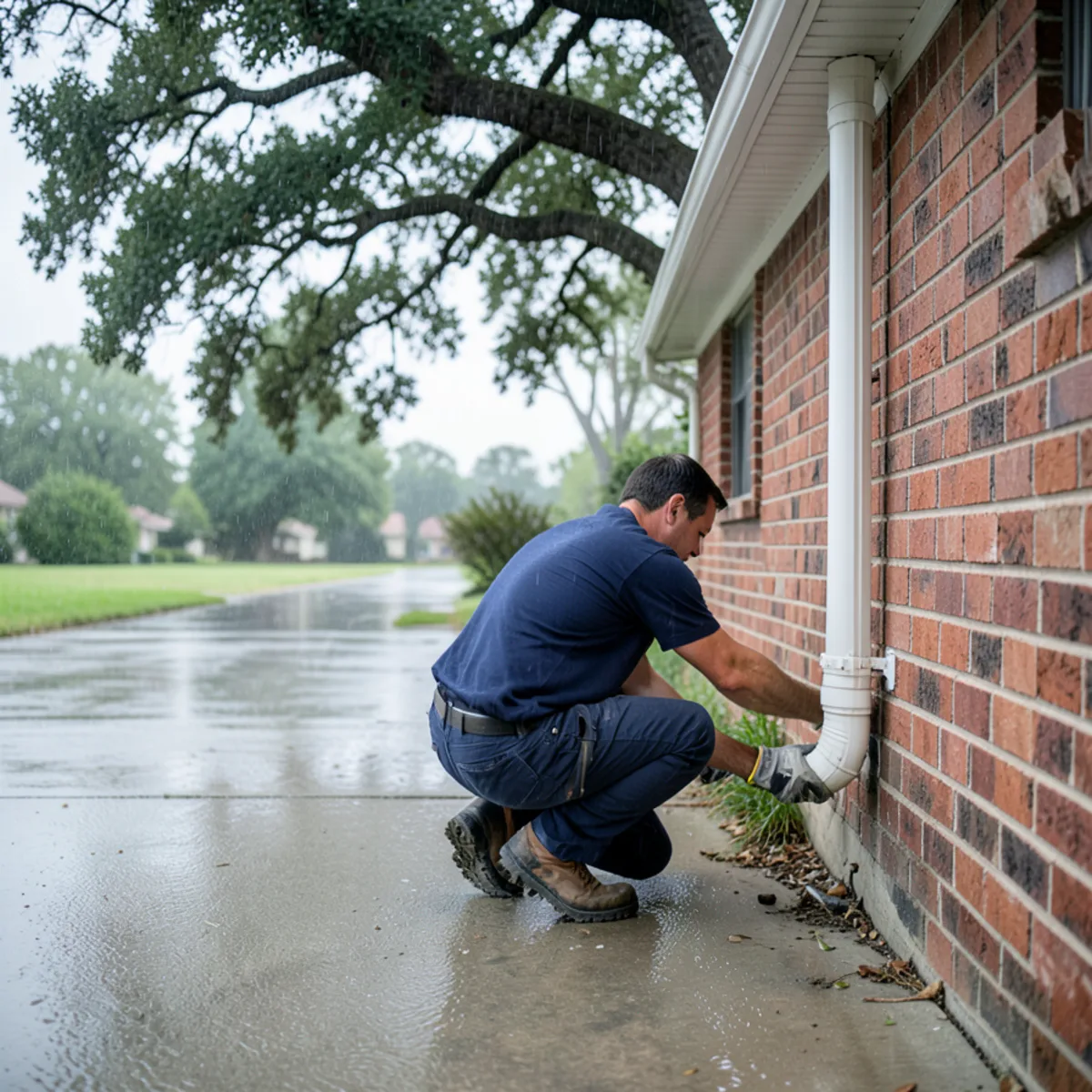
The clearest clogged downspout signs are a dry outlet during rain and a gutter overflowing right above the downspout. To confirm, run a garden hose into the top opening. If water backs up or barely trickles out the bottom, the pipe is blocked. Most clogs sit in the elbows, and most can be cleared without replacing anything.
What are the signs of a clogged downspout?
Watch during a steady rain, when the signs are easy to read. A downspout is doing its job when water leaves the bottom at a steady pace. Anything else needs a look.
- Dry or trickling outlet while the gutter above is full.
- Overflow at one spot, usually right over the downspout, while the rest of the gutter is fine.
- Water spraying from a joint partway down the pipe.
- Gurgling or a slow, hollow glug, with water backing up the pipe.
- A bulged or split seam on the downspout. Trapped water and debris push the metal out.
- Standing water in the gutter a day after rain.
- Wet wall or stained siding behind the downspout.
- A washed-out strip of soil or mulch under the overflow point.
One sign alone can mislead. A gutter overflowing along its full length in a cloudburst may simply be taking on more water than it can carry at that moment. Overflow in one spot, with a weak outlet below, points to the downspout.
Downspout still backing up after you tried clearing it? Call and we will find the blockage and quote the fix.
- 4.5★ from 36 Google reviews
- Free estimates
- Run by owner Victor and his son Omar
How do you test a downspout with a hose?
This is the quickest check, and it works on a dry day. Set a ladder on firm ground, keep three points of contact, and skip this on a second story if you are not comfortable up there.
- Look into the gutter outlet from above. Pull out any leaves on top of the opening with gloved hands.
- Have a helper stand at the bottom.
- Feed a garden hose into the top opening and turn it on at moderate flow.
- Watch the outlet. Strong, steady flow means the pipe is clear.
- If it trickles, stops, or fills up and spills over the top, the pipe is blocked.
- Tap down the pipe with a screwdriver handle. A dull thud rather than a ring often marks the clog.
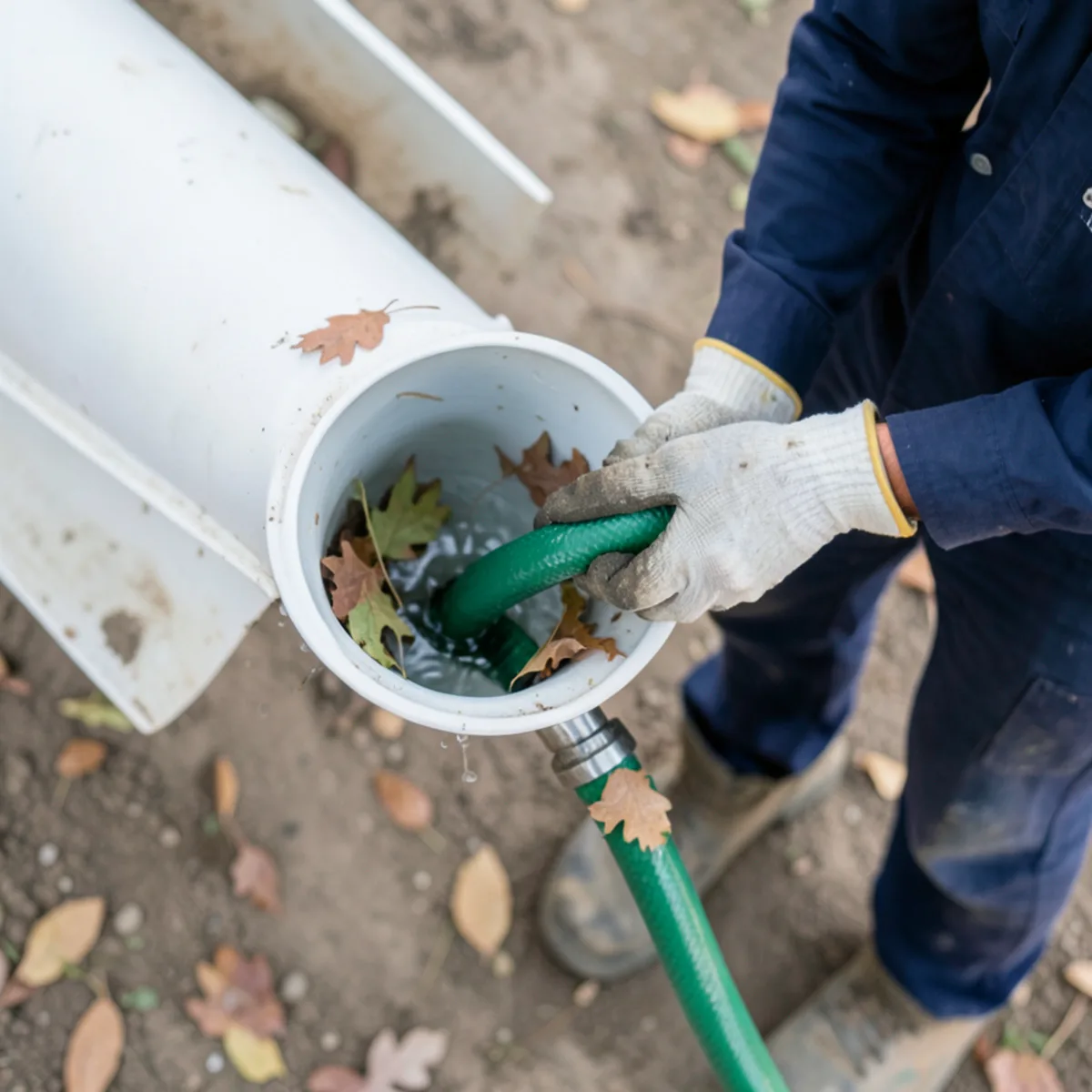
One limit to keep in mind. A hose is a small test. NOAA Atlas 14 puts a 10-year, 5-minute storm at Austin City Hall at 0.80 inch, which by our arithmetic sends about 60 gallons a minute off the 600 square feet a 2x3 pipe is sized to drain. A garden hose delivers a small fraction of that, so a half-blocked pipe can pass the test and still back up in a cloudburst. If the outlet flows but looks weak, or the overflow keeps happening in hard rain, go back and watch a real storm.
Where do downspouts clog, and how do you clear them?
Start with the easiest fix and work up. Elbows are the usual spot, since debris has to turn a corner there. A bent section or a small 2x3 pipe clogs sooner than a straight 3x4, which has twice the opening.
| Where the clog is | How to clear it | Watch out for |
|---|---|---|
| Top of the outlet | Lift out debris by hand | Gloves. Sharp metal edges |
| Upper elbow | Hose from the top, or a hand-crank drain snake | Do not force a stiff rod through a thin joint |
| Straight section | Pressure from a hose nozzle, from the bottom up, then flush from the top | Water backing up on you |
| Bottom elbow | Remove the elbow screws, take it off and clean it | Refit it in the same direction |
| Buried drain line | Disconnect and flush from both ends if you can reach them | Roots or crushed pipe need a professional |
If taking a section apart is more than you want to do, downspout unclogging is a straightforward service call. When the trough itself is full, residential gutter cleaning deals with the source, because a cleared downspout refills fast under a packed gutter.
Clogged downspout signs that point to a bigger problem
Sometimes the clog is only a symptom. Look for these if a pipe keeps blocking up.
- Crushed elbows or pipe. Mower hits, hail or a parked trailer can pinch the opening.
- A small outlet hole. A cut that is rough or undersized catches leaves at the top.
- A long horizontal run with too little fall, so debris settles inside.
- Undersized pipe. A 2x3 is sized for about 600 square feet of roof, and a 3x4 for about 1,200.
- A buried line that is damaged. Water that surfaces in the yard away from the outlet is the giveaway.
These are repairs rather than cleaning. Downspout installation covers larger pipe, new outlets, and extra downspouts on overworked runs.
Catkins, granules and nests: what plugs pipes around here
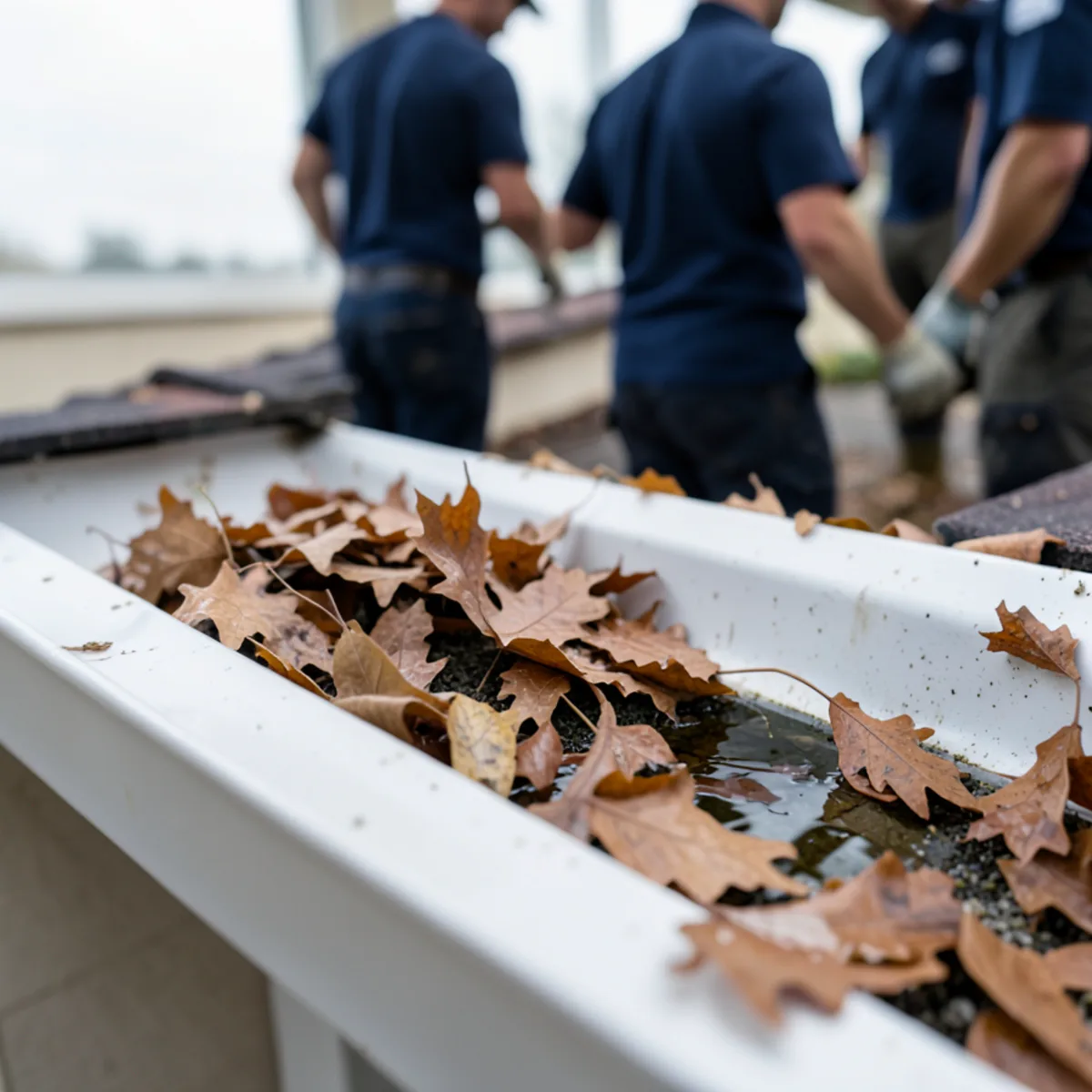
As a general pattern, timing tells you a lot. Live oaks are the classic local culprit, and not in fall. Texas A&M AgriLife Extension explains that live oaks are not true evergreens: they shed older leaves as new ones come in during spring. Spring catkins add to the load, so downspouts often clog just before the wettest stretch of the year, with May at 5.13 inches in NOAA's normals. A fall-only cleaning schedule misses that.
Other common finds are roof granules that settle in elbows and nests built in outlets that stay dry for long stretches. Older neighborhoods like those in Round Rock often have aging builder-grade downspouts that have been dented over the years, which narrows the pipe and gives debris something to catch on.
Clear it yourself or call?
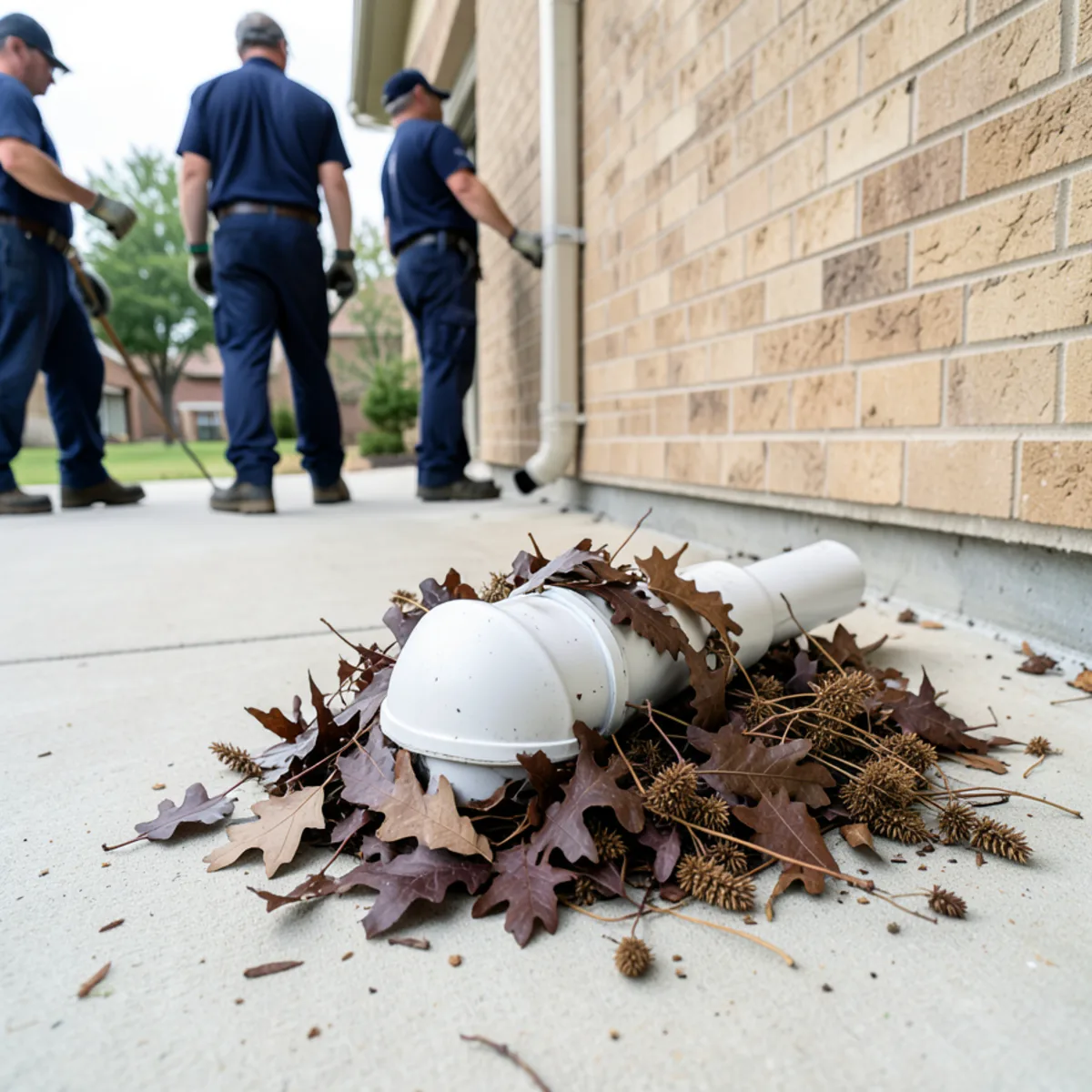
A ground-level elbow on a one-story house is a fair job for an afternoon. Two screws, one elbow, a bucket of wet leaves. The trade-off changes with height. The upper elbows at the eave are where most of the awkward clogs sit, and clearing them means working a ladder with both hands busy and water running back at you. Take that to a service call on a second story. Repeat clogs are also a poor DIY project, because clearing a pipe does nothing for a crushed elbow or a rough outlet.
Moving up to a bigger pipe has its own cost. A 3x4 takes longer to plug, but it means a new outlet cut in the gutter, and it sits wider on the wall. Under oaks it is often worth doing. On a clear lot with one bad elbow, a repair is the better spend.
How often should you check them?
West Virginia University Extension says gutters should be cleaned at least twice a year, and more where severe storms are common. Check downspouts during those same visits. In Central Texas, one good time is late spring, after oaks finish shedding, and another is late fall. Add a quick look after any big storm. Under heavy tree cover, you may need a third round.
Guards help by keeping larger debris out, though fine material still gets through, so plan on occasional flushing. WVU's advice on safety is sound as well: wear heavy gloves and eye protection, and do not climb onto the roof to do this work.
Keep the exit open
A gutter is only as good as its outlet. Watch one rain, run one hose test, and clear the elbows before spring. If the pipe keeps clogging, stop clearing it and find out why. That is the time to call us. We will run water through it, find the blockage, and clear it or put the repair in a written quote.
Sources
Common questions
Why is water coming out of my downspout seam?
Usually because water is backing up behind a clog below that seam. Pressure pushes water out of the nearest joint. Clear the blockage first, then check the seam. If the metal has bulged or split, that section needs replacing, since the pipe has been stretched. A loose joint with no clog below may only need new screws.
Can I use a pressure washer to clear a downspout?
No. A strong jet can pack the clog tighter, split thin aluminum joints and blow debris onto you. A garden hose nozzle, from the bottom and then the top, does the job in most cases. If that fails, try a hand-crank drain snake, or take the lower elbow off and clean it by hand.
How do I know if an underground downspout drain is clogged?
Run a hose into the downspout and watch where the water comes out. If it backs up at the top, or leaves the outlet weakly or not at all, the line is blocked. Water bubbling up in the yard partway along suggests a break. Check that the far end is open, since soil and roots often seal the exit.
Can a downspout clog even when the gutter looks clean?
Yes. Oak catkins, roof granules and small nests can pass through a clear trough and settle in an elbow, so the gutter looks fine while the pipe slowly closes. Check the outlet in a steady rain or run the hose test. In Central Texas, do that in late spring, once the live oaks finish shedding.
About the author
Written by the crew at V&V Seamless Gutters, the Austin gutter company run by owner Victor and his son Omar. Read more about us or see what customers say.
Related service: downspout unclogging in Austin. We also work in Round Rock.
Have a gutter question this article did not answer?
- 4.5★ from 36 Google reviews
- Free estimates
- Run by owner Victor and his son Omar