
Taylor is on our service map. It sits in southeastern Williamson County where US 79 crosses SH 95, about 45 minutes in normal traffic from South Austin by way of SH 130. What sets Taylor apart is how old its housing is next to how much is coming. Census survey data puts the median home here at 1979, against about 2000 for the Austin area, and roughly one in four predates 1960. Just outside town stands the Samsung semiconductor plant announced in 2021 at $17 billion. The 2020 census counted 16,267 residents. Shops and warehouses in town can ask about commercial gutter cleaning, and owners weighing a heavier metal can ask about steel gutters.
Main Street, US 79 and the 76574 ZIP code
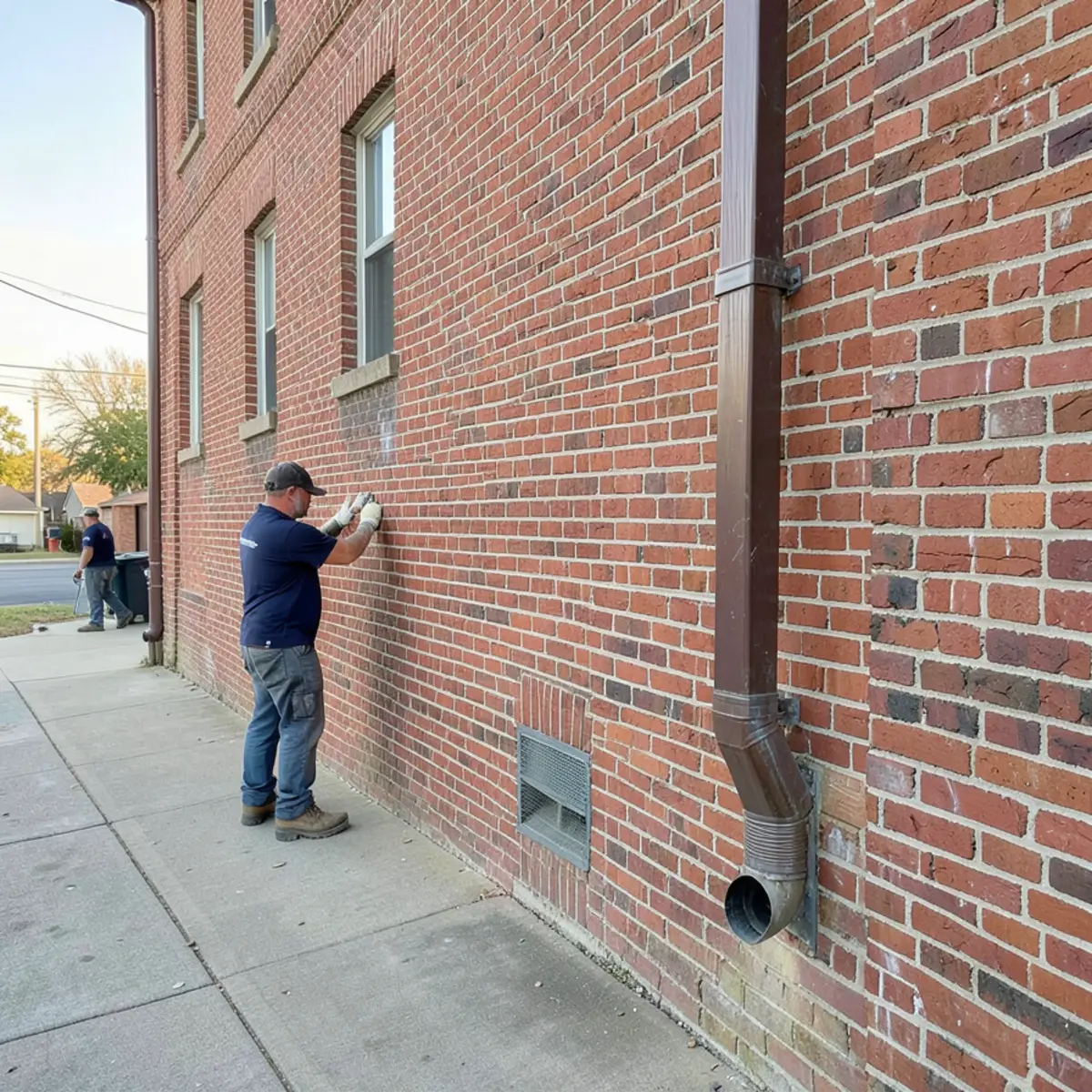
Taylor started as a rail town. Lots were auctioned in 1876 ahead of the International-Great Northern, and the place later billed itself as the largest inland cotton market in the world. Restoration of the downtown brick began after the city hired a Main Street manager in 1983. If you own one of those commercial buildings, tell us when you call. Box gutters need a closer look, and we will confirm scope on the estimate.
Rules here come from Taylor, not Austin. Austin's exempt-work list has no standing in 76574, so ask the City of Taylor what applies to your job and check any HOA covenants on newer streets.
Drainage is a city utility here. Taylor bills a Municipal Drainage Utility fee on the monthly utility bill, treats a residential property as one equivalent residential unit, and puts the money toward maintenance and projects in its 2020 Drainage Master Plan. The FY2024 capital list includes a Donna Channel and Mustang Creek project. That work handles streets and channels, while the water on your lot stays yours to manage, so keep extensions off a neighbor's yard.
Two public landmarks help place a job here: the Williamson County Expo Center on Bill Pickett Trail and Murphy Park, home of the city pool. Tell us which side of US 79 you are on when you call.
Gutter installation on blackland clay and old fascia
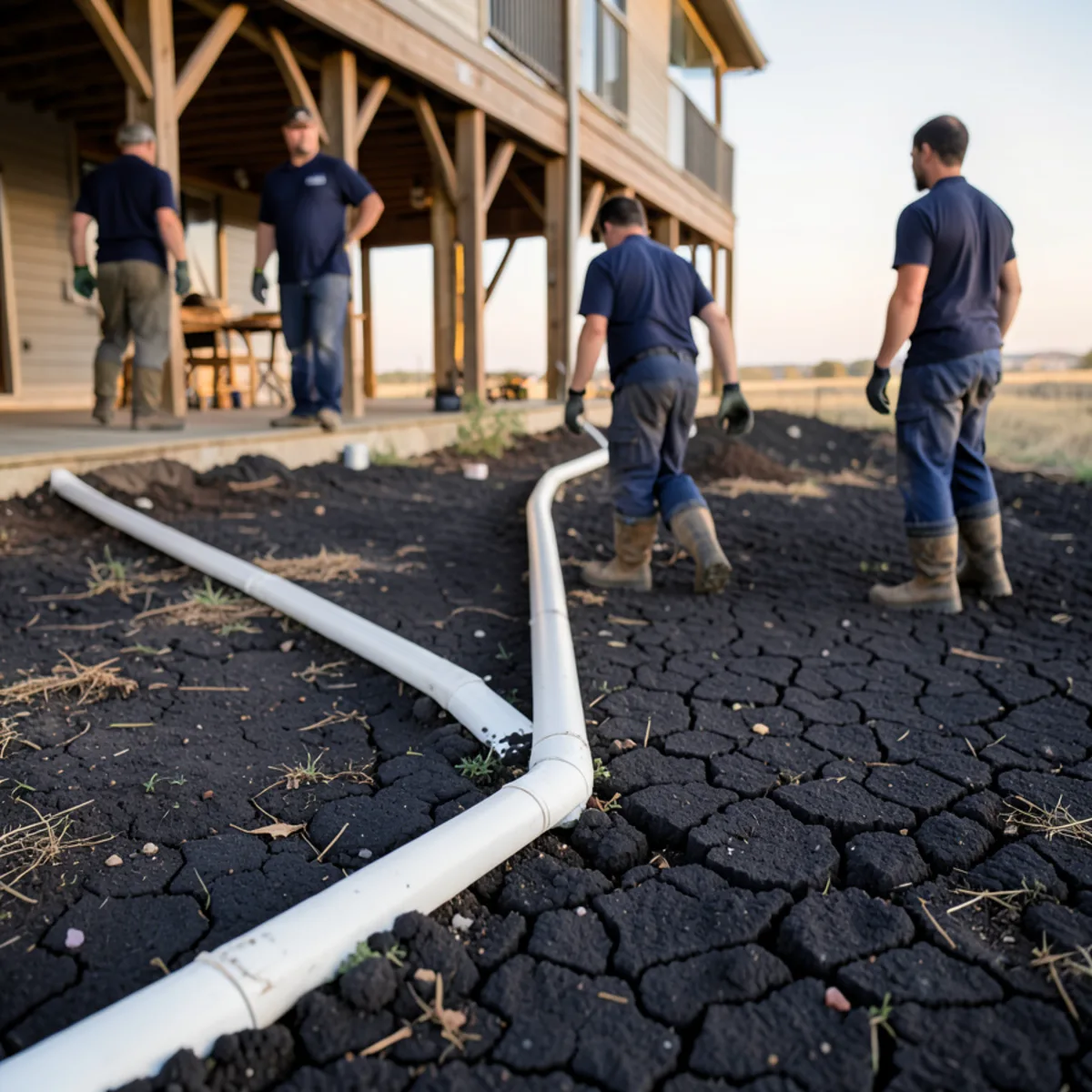
The Handbook of Texas describes eastern Williamson County as flat to gently rolling, at around 600 feet, with dark, loamy to clayey blackland soil. Clay like that swells when wet and shrinks when dry, so water dumped beside a wall is a foundation issue as much as a gutter issue. Flat lots make it worse because discharge has little fall to carry it away. We want 6 to 10 feet of downspout extension here and never less than 5, which is the USDA NRCS guidance for expansive soils. A splash block alone will not reach that far.
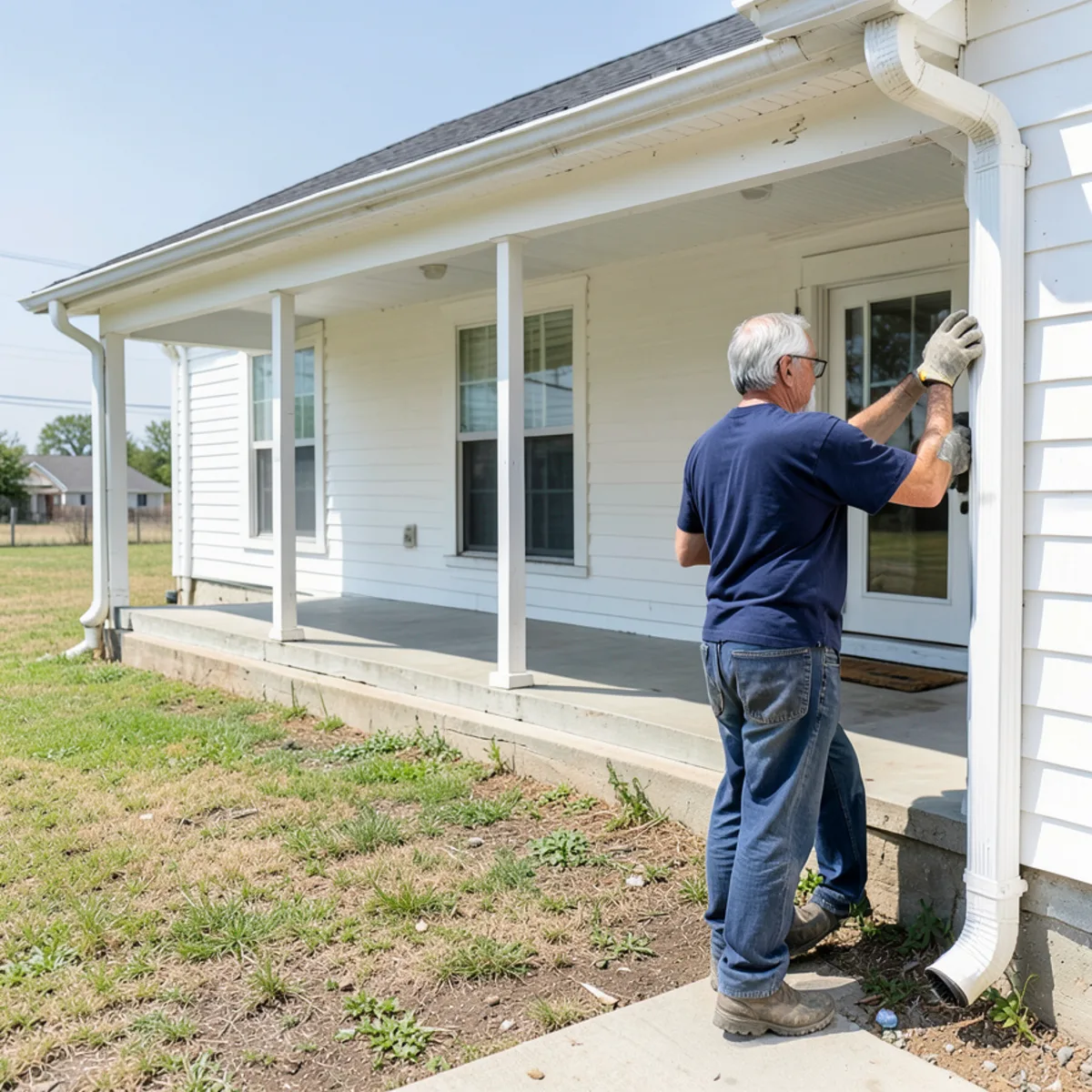
Age shows up at the roof edge. A house from the 1950s has usually had gutters added, swapped or patched more than once. We check the fascia before we hang anything, because a new gutter is only as solid as the board behind it. When a wood repair is needed, we will confirm that scope on the estimate.
Weather and trees add the rest. The Handbook of Texas gives Williamson County about 34 inches of rain a year, a little under Austin's total, and short storms are what show whether a flat lot can shed it. Most of this side of the county is open farmland, wooded mainly along its streams with mesquite, oak, pecan and elm. A house near one of those stream lines gets a leaf load that a house on open blackland does not, so we ask what is overhead before we talk about guards.
- Gutter replacement
Pull decades of patched sections off a pre-1960 house and hang one seamless run. About one in four Taylor homes predates 1960, and the old metal leaves with us when the new run is up.
- Fascia and soffit repair
Old wood boards near Main Street get checked before any new hangers go in. If a board has gone soft, you hear it before you approve anything, and we confirm that wood scope on the estimate.
- Downspout installation
Flat blackland lots need longer extensions to move water off the clay. We aim for 6 to 10 feet in Taylor and check that the ground keeps falling where each extension ends.
- Sagging gutter repair
Reset hangers and slope where a long-serving run has started to pull away. Boards on older houses around US 79 can carry several rounds of fastener holes, so we plan new hanger spacing around them.
- Box gutters
Brick commercial buildings downtown may carry built-in or box runs. Tell us what you own on Main Street, and we will confirm the scope on the quote before anything is planned.
- Gutter cleaning
Pecan and elm along Taylor's stream lines can load a gutter in fall, and flat lots give overflow nowhere to go, so clear outlets before the rain arrives.
From first call to walkthrough
- Free estimate: we measure linear feet, check the fascia and mark downspout spots.
- Written line-item quote covering gauge, size, color, downspout count and guards.
- You approve with no sales pressure and we set a date.
- Old gutters come off, and the new run is roll-formed at your curb and hung with proper slope.
- Cleanup and a walkthrough, with every downspout discharge checked.
“Omar and his coworker replaced all our old gutters, hauled off the old gutters and said to call if we had any issues at all. Very polite and efficient.”
“…Victor was professional and responsive. We were very impressed with his work, and his team was great to deal with. I never thought I’d say that I’d be excited about something as routine as gutters, but I am excited about these gutters! The service was speedy and very high quality.”
Own an older Taylor house with tired gutters? Call and we will come measure it.
- 4.5★ from 36 Google reviews
- Free estimates
- Run by owner Victor and his son Omar
Sources
Taylor gutter questions
Can new gutters go on an old Taylor house with original wood trim?
Usually, once the wood is sound. We inspect the fascia during the free estimate and note any soft spots. Sound boards take new hangers well. Rotted sections need attention first, and we will tell you on the estimate what that scope looks like. Older homes in Taylor often show several generations of holes, so we plan hanger spacing around them.
How far should downspouts discharge on Taylor's blackland soil?
Aim for 6 to 10 feet from the foundation and never under 5. USDA NRCS design guidance calls for at least 5 feet on expansive soils, and the dark clay across eastern Williamson County fits that description. Flat lots here drain slowly, so we also look at where water goes after the extension ends.